





BLOG

Difference between an E-plane tee and an H-plane tee
June 22, 2026
When designing waveguide systems for radar, satellite communication, or high-frequency test equipment, understanding the difference between an E-plane tee and an H-plane tee is essential. Both components serve as power dividers in waveguide assemblies, yet they differ fundamentally in their orientation and signal behavior. An E-plane tee divides power in the plane of the electric field, producing signals with a 180-degree phase difference at the two output arms. Conversely, an H-plane tee splits power in the plane of the magnetic field, delivering in-phase signals. Selecting the right configuration impacts insertion loss, isolation, and overall system performance in mission-critical applications.
Coaxial Load Applications in Communication and Radar Systems
June 18, 2026
Coaxial load applications span critical roles in communication and radar systems, where they absorb excess RF energy to protect sensitive equipment, ensure precise impedance matching, and enable safe transmitter testing. These termination devices convert electromagnetic power into heat, preventing destructive signal reflections that compromise system integrity. From calibrating base station infrastructure to safeguarding aerospace radar transmitters, coaxial terminations serve as indispensable tools for procurement engineers seeking reliability in mission-critical environments. Understanding their operational principles and application contexts empowers B2B buyers to make informed sourcing decisions.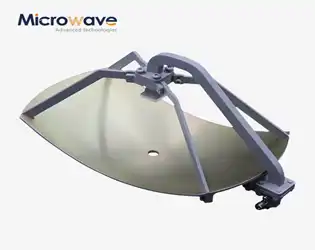
Parabolic Antenna Gain and Performance Optimization Guide
June 18, 2026
To get the best parabolic antenna gain, you need to test the whole thing and make sure that the design, quality of the materials, and environment where it works are all matched. The performance is based on how well the feed horn is aligned, the mirror surface is oriented, and the frequency-specific opening works. Together, these things determine whether your system gains theoretical power or loses power that it could have won. In the real world, engineers who work with radar sites, point-to-point microwave links, and satellite ground stations need to know how mechanical limits, polarization alignment, and weather affect the quality of transmission and link budget gaps.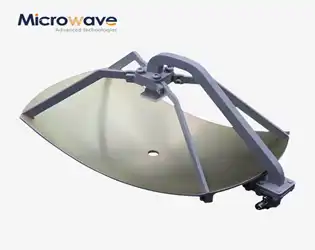
How Does a Parabolic Antenna Improve Signal Directivity?
June 18, 2026
A parabolic antenna directs signals better because of its unique bent reflection shape. It does this by collimating and focusing electromagnetic waves coming from the feed horn into a very narrow beam. The cone-shaped surface reflects all signals, both coming in and going out, toward a single focus point. This is where the feed antenna is put. There is a small beamwidth because of this. Because of this geometric accuracy, it is possible to have very high gain (often over 30 to 50 dBi) and very little signal loss in places that aren't wanted. This makes point-to-point transmission much farther, cuts down on interference from close sources, and makes the best use of the airwaves. For this reason, parabolic antennas are necessary for microwave backup lines, satellite earth stations, and defense uses that need to be very reliable.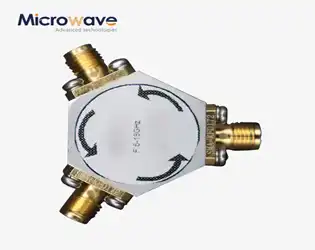
Broadband Circulator Applications in Communication Equipment
June 17, 2026
Broadband circulators serve as indispensable passive components in modern RF and microwave communication systems, directing signals unidirectionally through multiple ports while maintaining exceptional isolation between channels. These non-reciprocal devices leverage advanced ferrite material technology to enable simultaneous transmission and reception across wide frequency ranges—from DC to 40 GHz—without the interference that typically plagues traditional signal routing methods. By allowing signals to flow from Port 1 to Port 2, Port 2 to Port 3, and Port 3 back to Port 1, while blocking reverse pathways, broadband circulators protect sensitive receiver components from high-power transmit signals and optimise spectrum efficiency in mission-critical applications spanning defence radar, satellite ground stations, 5G base stations, and industrial IoT networks.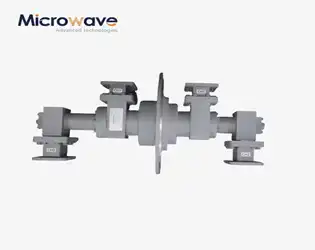
Dual Channel Coaxial Rotary Joint Selection and Design Factors
June 17, 2026
To choose the best dual channel coaxial rotary joint, you need to weigh the electrical performance, the mechanical longevity, and the needs of the application. These precise parts are needed for radar systems, satellite ground stations, and defense platforms because they allow continuous RF signal transfer across spinning surfaces without wire bending. We look at important factors like frequency range, insertion loss, channel separation, and expected rotating life. Choice of material, quality of bearings, and covering against the environment all have a direct effect on how reliable something is in mission-critical situations. By knowing these design factors, sourcing engineers can choose parts that will work consistently in tough operating situations and meet strict quality and safety standards.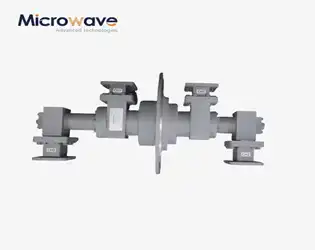
How Does a Dual Channel Coaxial Rotary Joint Improve Connectivity?
June 17, 2026
Two different RF signal lines can be sent at the same time across moving surfaces without signal loss or wire tangles with a dual-channel coaxial rotary joint. This makes the link much better. This part is different from most single-channel designs because it keeps channels very far apart—usually by more than 50dB—which stops electromagnetic interference and crosstalk. With low VSWR (under 1.4:1) and low insertion loss (below 1.0 dB), the circle shape lets the signal keep its structure while moving in all directions all the time. This dual-path feature lets you send twice as much data, talk to people in both ways, and work with dual-polarization transfer. It is necessary for radar systems, satellite ground stations, and moving sensor platforms where mission success relies on sending and receiving signals without interruption and with high quality.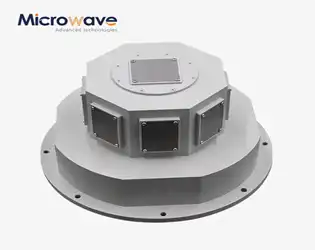
What Makes a Slotted Waveguide Array Antenna Highly Directional?
June 17, 2026
A slotted waveguide array antenna achieves exceptional directionality through precise slot positioning that enables constructive interference across its aperture. Unlike conventional antennas, these arrays leverage waveguide propagation combined with strategically machined slots acting as magnetic dipoles. The spacing, orientation, and depth of each slot control amplitude and phase distribution, creating focused electromagnetic beams with minimal sidelobes. This fundamental design principle delivers superior gain and narrow beamwidth, making slotted waveguide arrays indispensable for radar, satellite communication, and defence applications where precision targeting and interference suppression are paramount.