





BLOG

Twistable Waveguides: Design, Materials, and Applications
August 10, 2026
Twistable waveguides represent a specialized category of microwave transmission devices engineered to adjust electromagnetic wave polarization through precise mechanical structures. Unlike conventional rigid or standard flexible waveguides, these components allow controlled rotation of polarization angles—typically 90° or 180°—while maintaining exceptional signal integrity across frequencies spanning 2.2 GHz to 110 GHz. By enabling polarization adjustment without compromising transmission quality, twistable waveguides solve critical alignment challenges in radar, satellite ground stations, and high-frequency test systems where mismatched polarization would otherwise degrade performance or require costly system redesigns.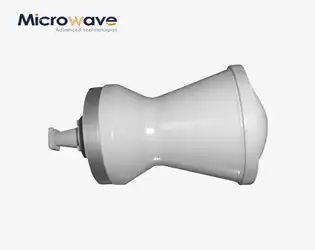
Horn Lens Antenna Design Factors Affecting Signal Quality
August 7, 2026
When evaluating horn lens antenna performance in mission-critical RF systems, signal quality hinges on a delicate interplay of design variables. The horn structure radiates electromagnetic waves while the lens component collimates and focuses these signals, creating directional beams with minimal distortion. Dielectric properties of lens materials, horn aperture geometry, and precise mechanical alignment collectively determine insertion loss, beam width, and cross-polarization levels—parameters that directly impact system reliability in satellite ground stations, radar installations, and high-frequency communication links where signal integrity cannot be compromised.
Custom Crossguide Coupler Manufacturing Considerations
August 7, 2026
When sourcing precision RF components for mission-critical applications, understanding the nuances of crossguide coupler manufacturing becomes paramount. A crossguide coupler is a specialized waveguide device that samples microwave energy from one waveguide path and directs it to another, enabling signal monitoring, power distribution, and system diagnostics without disrupting primary signal flow. Manufacturing custom crossguide couplers requires meticulous attention to mechanical precision, material selection, and electromagnetic performance validation—factors that directly influence long-term reliability in radar, satellite communication, and defense systems where signal integrity cannot be compromised.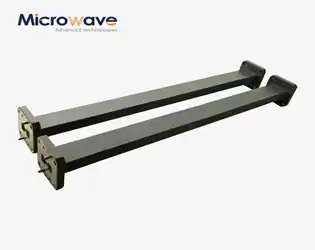
Straight Waveguide Design Basics for RF Applications
August 7, 2026
A straight waveguide is a hollow metallic tube with a uniform cross-section that transmits electromagnetic waves along its length without bending or tapering. In RF applications, these precision-engineered conduits enable low-loss signal propagation by confining electromagnetic energy within rigid metallic boundaries. By maintaining consistent dimensional tolerances and high-conductivity surfaces, straight waveguides deliver reliable performance across defined frequency bands, making them indispensable in radar systems, satellite ground stations, and aerospace communication equipment where signal integrity cannot be compromised.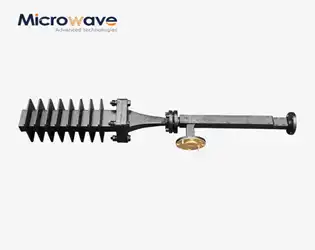
Attenuator network electrical power systems function
August 7, 2026
Attenuator networks are indispensable components in electrical power systems, designed to control and reduce signal amplitude while preserving waveform integrity. In RF and microwave applications, a microwave fixed attenuator serves as a stable, passive device that mitigates signal overpowering, manages impedance matching, and minimizes reflections. These devices absorb excess power and dissipate it as heat, protecting sensitive downstream equipment such as amplifiers, receivers, and measurement instruments from damage caused by excessive signal strength. By maintaining consistent attenuation values across defined frequency ranges, they ensure signal clarity and system reliability in mission-critical environments like satellite communications, radar systems, and aerospace applications.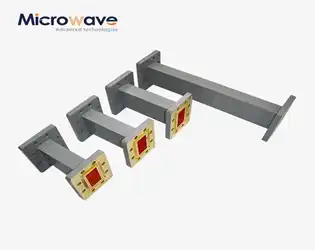
Straight Waveguide Section Dimensions Engineers Need to Know
August 6, 2026
When specifying a straight waveguide section for high-frequency RF systems, engineers must understand that dimensional accuracy directly determines electromagnetic performance. The straight waveguide section serves as the backbone of signal transmission in radar, satellite communication, and defense applications, where even micron-level deviations in cross-sectional dimensions can result in signal reflection, increased insertion loss, and mode distortion. Understanding the relationship between physical dimensions—particularly inner width (a), height (b), wall thickness, and overall length—and operational frequency ranges ensures procurement teams select components that deliver consistent performance across mission-critical environments.
High Gain AC Signal Amplifier Performance Explained
August 6, 2026
An AC signal amplifier strengthens alternating current signals to improve transmission quality across communication systems. High-gain models deliver substantial signal boosts—typically 20 dB to over 60 dB—making them indispensable for applications requiring reliable long-distance signal integrity. These amplifiers address signal degradation challenges in satellite communications, radar installations, and RF testing environments where precision matters most.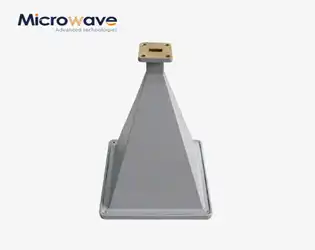
Pyramid Antenna for Microwave Testing: Key Features Explained
August 6, 2026
When planning high-precision microwave testing, engineers and procurement managers often encounter the challenge of selecting antennas that balance directivity, measurement accuracy, and environmental robustness. The pyramid antenna stands out as a specialized solution designed specifically for demanding microwave measurement scenarios. Unlike conventional horn or parabolic antennas, pyramid antennas deliver exceptional beam control and low sidelobe performance, making them indispensable for applications ranging from radar calibration to satellite ground station validation. This article unpacks the critical features of these antennas, providing technical buyers with actionable insights to streamline procurement decisions and optimize testing outcomes.