





BLOG
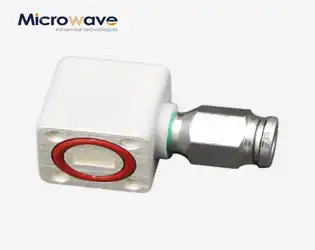
Waveguide Section Types for Different RF Systems
August 5, 2026
When designing RF systems for satellite communication, radar, or 5G infrastructure, choosing the right waveguide configuration is crucial to performance. Waveguide sections come in multiple forms—straight, curved, flexible, and twisted—each designed to address specific transmission challenges. Among these, the straight waveguide section remains the most widely used due to its simplicity, low insertion loss, and predictable electromagnetic behavior. These rigid sections transmit microwave signals efficiently across X-band, Ku-band, and Ka-band frequencies, handling high power densities while maintaining signal integrity. Whether you're integrating waveguide assemblies into defense radar systems or satellite ground stations, understanding the structural and electrical characteristics of each waveguide type enables smarter procurement decisions and optimized system design.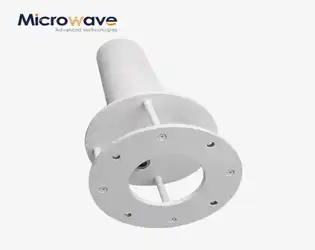
Quadrifilar Helix Antenna Gain Optimization Explained
August 5, 2026
Optimizing gain in quadrifilar helix antennas requires a systematic approach combining precise geometric design, balanced feed networks, and careful material selection. These compact, circularly polarized antennas achieve enhanced performance through adjustments in helix pitch, element spacing, and impedance matching, delivering consistent omnidirectional coverage essential for satellite communications and GPS applications. At Advanced Microwave Technologies Co., Ltd., we leverage over two decades of manufacturing expertise to design high-gain antennas tailored to demanding aerospace, defense, and telecommunications requirements, ensuring reliable signal integrity across frequencies from 1 GHz to 40 GHz.
Waveguide Bandpass Filter Design for High Frequency Applications
August 5, 2026
High-frequency systems operating above 10 GHz demand signal selectivity that conventional filter technologies struggle to deliver. Waveguide bandpass filters, or WG bandpass filter designs, address this challenge by leveraging hollow metallic structures to propagate electromagnetic waves with minimal loss. These filters excel in applications ranging from satellite ground stations to military radar systems, where precision signal control directly impacts mission success. Their robust construction and superior power handling make them indispensable in aerospace communications, 5G infrastructure, and research instrumentation requiring reliable frequency discrimination across X-band, Ku-band, and Ka-band spectrums.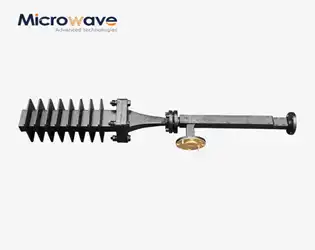
Microwave Attenuator Applications in Communication Systems
August 4, 2026
Microwave attenuators have become indispensable in modern communication infrastructures, serving as precision tools that reduce RF signal power to protect sensitive circuits and maintain optimal system performance. A microwave fixed attenuator delivers consistent attenuation values across specified frequency ranges, making it essential for testing equipment, calibrating signal chains, and preventing receiver overload in satellite ground stations, radar installations, and wireless networks. These components ensure signal integrity while safeguarding expensive downstream components from damage caused by excessive power levels.
AC Signal Amplifier Circuit Design for Better Signal Quality
August 4, 2026
An AC signal amplifier is a specialized electronic circuit designed to boost weak alternating current signals while preserving their original waveform characteristics. In mission-critical applications spanning satellite communications, defense radar systems, and aerospace navigation, these amplifiers ensure that signals maintain their integrity across transmission paths, reducing distortion and noise. By carefully balancing gain, bandwidth, and linearity, a well-designed amplifier circuit becomes the cornerstone of reliable RF and microwave communication systems that demand precision and stability.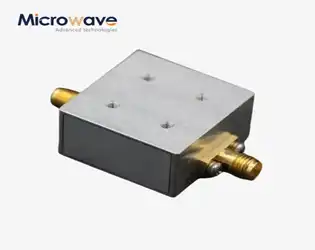
Coplanar Waveguide Design Principles for RF Engineers
August 4, 2026
Coplanar waveguide (CPW) technology represents a critical transmission line architecture in modern RF engineering, characterized by its unique planar geometry where the center conductor and ground planes reside on the same substrate surface. This configuration delivers exceptional signal integrity at microwave and millimeter-wave frequencies, making it indispensable for applications demanding minimal dispersion, tight field confinement, and simplified integration with active components. Understanding CPW design principles enables procurement teams and engineers to specify components that meet stringent performance requirements in defense, satellite communications, and research environments.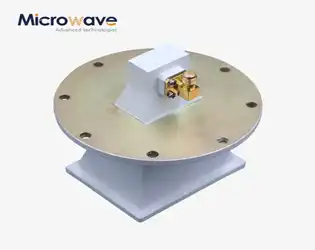
Broadband Pyramid Antenna Solutions for Modern Applications
August 3, 2026
Broadband pyramid antenna solutions represent a critical advancement in modern RF and microwave communication systems, offering exceptional wideband performance through their distinctive geometric structure. These antennas leverage a tapered pyramidal configuration to achieve superior impedance matching across extended frequency ranges, making them indispensable for applications spanning 5G telecommunications, aerospace radar systems, and satellite ground stations. Their ability to maintain consistent radiation patterns while minimising signal reflection has positioned them as preferred components in mission-critical deployments.
Crossguide Coupler Applications in Microwave Networks
August 3, 2026
Crossguide couplers represent a sophisticated class of directional couplers used extensively in high-frequency microwave networks, enabling precise power sampling, signal monitoring, and distribution across multiple channels. These waveguide-based components operate by coupling electromagnetic energy between two perpendicular waveguide arms, delivering exceptional directivity and isolation characteristics essential for mission-critical applications. At Advanced Microwave Technologies Co., Ltd, we've witnessed growing demand for these devices across defense radar systems, satellite ground stations, and telecommunications infrastructure, where their ability to maintain signal integrity at frequencies extending beyond 40 GHz makes them irreplaceable for modern RF architectures.