





BLOG
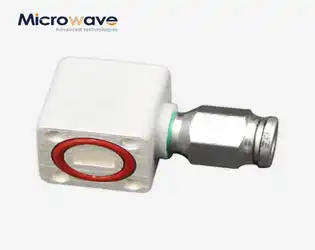
Straight Waveguide Section Guide for Microwave Engineers
July 29, 2026
Straight waveguide sections are still very important in current RF and microwave systems when choosing precise parts for sending high-frequency signals. These hollow metal transmission lines, which can be made with square, round, or other special cross-sections, guide electromagnetic waves through internal reflection. This gets rid of the dielectric losses that happen in coaxial cables above 2 GHz. Straight waveguide sections can handle megawatt-class peak power levels while keeping the integrity of signals in mission-critical radar, satellite ground stations, and military communication systems. This is in contrast to cable bundles, which tend to break down under high power. Because they naturally block electromagnetic waves well and don't lose much of their power, procurement engineers who need stability, performance, and compliance in settings with a lot of electromagnetic fields choose these.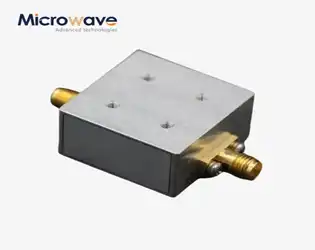
July 29, 2026
A coplanar waveguide (CPW) is a specialized transmission line structure used in microwave and RF circuits, featuring a central signal conductor positioned between two ground planes—all located on the same side of a dielectric substrate. Unlike traditional microstrip or stripline configurations, this planar arrangement confines electromagnetic fields primarily at the substrate surface, enabling exceptional impedance control and design flexibility. Engineers favor CPWs for their ease of integration with active devices, minimal parasitic effects, and compatibility with both thin-film and printed circuit board manufacturing processes. The architecture simplifies connections to components like transistors and diodes, making CPWs indispensable in applications ranging from satellite communication modules to millimeter-wave radar systems.
Horn Lens Antenna for Microwave Systems: Performance Guide
July 28, 2026
Horn lens antennas represent a sophisticated fusion of traditional horn architecture and precision dielectric lens technology, delivering superior beam control and enhanced directivity in mission-critical microwave applications. By integrating carefully engineered lens elements into the horn aperture, these antennas achieve narrower beamwidths and higher gain compared to standard horn designs, making them invaluable for radar systems, satellite ground stations, and next-generation wireless infrastructure where signal accuracy determines operational success.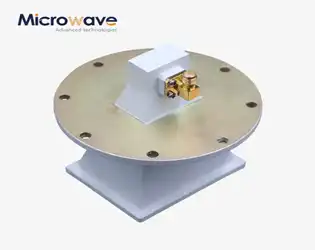
How to Evaluate a Reliable Pyramid Antenna Manufacturer
July 28, 2026
Selecting a dependable pyramid antenna manufacturer requires systematic evaluation of technical capabilities, quality standards, and operational reliability. B2B procurement professionals must verify engineering precision, compliance certifications like ISO 9001 and RoHS, customization expertise, and post-delivery support. Analyzing manufacturer reputation through client testimonials, reviewing technical documentation, and assessing production infrastructure ensures partnerships that deliver consistent product quality and minimize supply chain disruptions across mission-critical applications.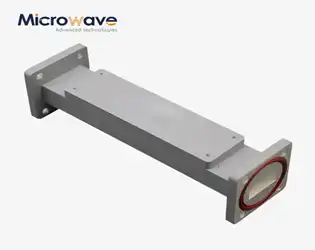
High Q bandpass filter selection for communications
July 28, 2026
Selecting high-Q bandpass filters for modern communication systems demands careful consideration of technical performance and environmental resilience. WG Bandpass Filter technologies stand out for their exceptional frequency selectivity and low insertion loss, making them indispensable in defense radar, satellite ground stations, and telecom infrastructure. These waveguide-based solutions deliver superior signal integrity across demanding applications, from X-band radar systems to millimeter-wave satellite links, where precision and reliability cannot be compromised.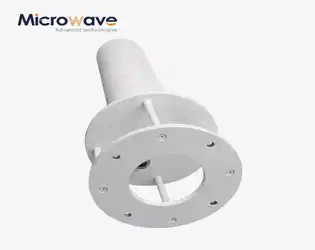
Quadrifilar Helix Antennas for Satellite Communication Systems
July 27, 2026
Quadrifilar helix antennas represent a pivotal advancement in satellite communication infrastructure, delivering omnidirectional radiation coverage paired with circular polarization that ensures uninterrupted connectivity in demanding operational environments. Our guide addresses the technical specifications, procurement considerations, and performance benchmarks critical to engineers and purchasing managers sourcing precision RF components for mission-critical applications. Drawing on over two decades of manufacturing expertise at Advanced Microwave Technologies Co., Ltd., we illuminate how these specialized antennas solve real-world challenges in aerospace, defense, and telecommunications sectors while meeting rigorous quality standards, including ISO 9001 certification and RoHS compliance.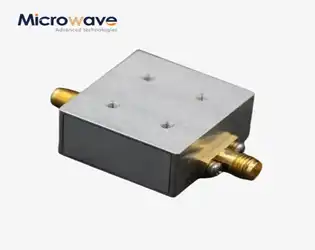
Coplanar Waveguide Antenna Performance and Applications
July 27, 2026
Coplanar waveguide antenna technology represents a pivotal advancement in modern RF system design, offering procurement managers and engineering teams a transmission line architecture that combines compact geometry with exceptional high-frequency performance. Unlike conventional microstrip designs, coplanar waveguide structures place signal conductors and ground planes on the same substrate surface, enabling tighter integration, reduced electromagnetic interference, and superior signal integrity across millimeter-wave frequencies. This configuration has become indispensable for defense radar systems, satellite ground stations, and next-generation wireless infrastructure where space constraints and performance demands intersect. Understanding how these antennas deliver measurable advantages in bandwidth efficiency and thermal stability can transform sourcing strategies for OEMs and system integrators alike.
Straight Waveguide Section for Microwave Applications Explained
July 27, 2026
A straight waveguide section is a metallic, hollow conduit—typically rectangular or circular—that transmits electromagnetic energy at microwave frequencies with minimal signal loss. Unlike coaxial cables that rely on inner conductors and dielectric insulators, straight waveguide sections guide electromagnetic waves through their hollow interior, where waves reflect off conductive walls and propagate in specific modes determined by geometry and frequency. This fundamental component enables efficient power transmission in radar systems, satellite ground stations, 5G base stations, and defence communication platforms, making it indispensable for applications demanding high reliability and precision.