





BLOG
Application of High Power Coaxial Switches in RF Test Setups
June 5, 2026
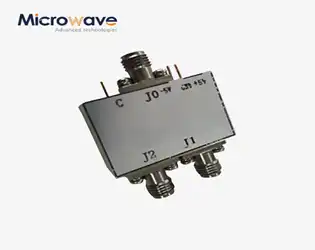
The high power coaxial switch is an important part of current RF test settings because it routes signals accurately across complex measurement systems. During antenna measurement, automated test routines, and multi-port system validation, these specialized devices keep the signal integrity while handling high power levels (from hundreds of watts to several kilowatts). High-power RF switches are different from regular ones because they have better heat management, stronger contact materials, and better internal shapes that stop arcing and make sure they work reliably in tough test circumstances. Because they can easily send messages between different test tools and devices, they are essential in labs for aerospace, defense, and telecommunications, where accurate measurements are important for making products and following rules.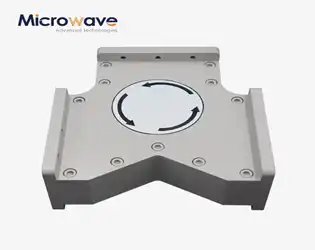
Understanding Insertion Loss in High Power Waveguide Circulators
June 4, 2026
Insertion loss in high-power waveguide circulators is the signal power loss that happens naturally as RF energy moves through the device from input to output. A high-power waveguide circulator works by sending microwave signals one after the other between ports while protecting sensitive transmitter gear from damaging reflections. Insertion loss, which is usually measured in decibels (dB), has a direct effect on how well a system works and how well it handles heat. When kilowatts to megawatts of power are used in mission-critical radar, satellite ground stations, and industrial heating applications, even small dB losses cause a lot of heat to be produced and energy to be lost. This is why insertion loss is one of the most important criteria used to make purchasing choices.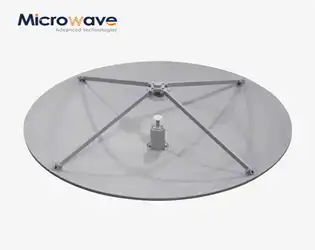
Cassegrain Antenna Design and Signal Performance
June 4, 2026
The cassegrain antenna design is a complex two-reflector structure that is now required for mission-critical radio frequency (RF) uses that need very good signal security. In this setup, there is a main parabolic reflector and a secondary hyperbolic sub-reflector close to the focus point. Together, they fold the signal path back toward the main dish tip. By putting the electronics and feed assembly behind the primary reflector, the Cassegrain antenna design gets rid of the need for long waveguide runs that are common in prime focus systems. This cuts down on insertion loss and greatly enhances the Gain-to-Noise Temperature (G/T) ratio, which is an important factor for high-frequency communications infrastructure, defense radar systems, and satellite communications.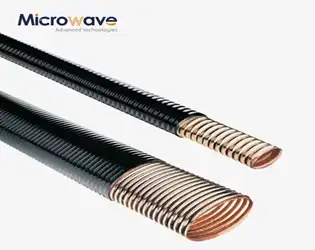
How Does an Elliptical Waveguide Reduce RF Loss?
June 4, 2026
Elliptical waveguides reduce RF loss mainly by improving the cross-sectional shape, which spreads electromagnetic fields more evenly and lowers the concentration of current density on conductor surfaces. The oval shape is better at matching resistance across a wider frequency range than standard circular or rectangular shapes. This successfully cuts down on reflection losses and mode conversion problems. This structural benefit, along with precision-corrugated copper construction and advanced fabrication techniques, ensures that signals are lost as little as possible, even in high-frequency applications up to 110 GHz. This makes them essential for satellite communications, defence radar systems, and the next generation of 5G infrastructure.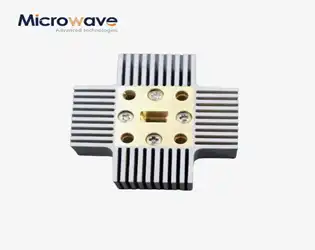
Why Use a Waveguide Pressure Window in Radar Systems?
June 1, 2026
Waveguide pressure windows act as airtight shields inside the radar system transmission lines. They create a physical wall that keeps pressured settings inside the system from the outside atmosphere while still letting electromagnetic waves pass through freely. These special parts keep the dielectric from breaking down in high-power radar applications, stop moisture and contaminants from getting in and damaging sensitive active parts, and keep working properly in all kinds of environments, from sea level to high-altitude deployments. This is why they are essential for mission-critical radar operations.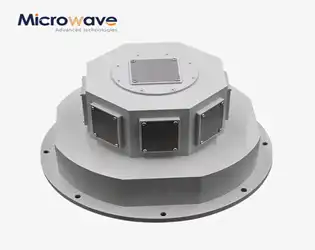
What is an advantage of a slotted antenna planar array over a parabolic reflector?
June 1, 2026
When considering antenna technologies for mission-critical uses, a slotted waveguide antenna clearly beats a parabolic reflector because it is smaller, has a lower profile, and can handle more power. The slotted waveguide antenna is different from big parabolic dishes because it has the feed network and emitting elements built into a flat, tough metal structure. This eliminates atmospheric drag and reduces the antenna's physical size. This design lets it be mounted smoothly on the fuselages of aeroplanes, military ships, and mobile platforms, where limited room and exposure to the elements require longevity and effectiveness. The waveguide-based architecture also reduces the feed loss that happens in high-frequency microstrip designs. This makes it work very well in radar and satellite transmission systems that use X-, Ku-, and Ka-band frequencies.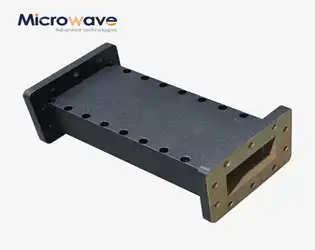
How Does a Waveguide Low-Pass Filter Function in Electronics
June 1, 2026
A Waveguide Low Pass Filter is a special kind of passive RF part that lets electromagnetic signals below a certain frequency pass through but weakens signals with higher frequencies. It's not like other coaxial filters because it uses the physical features of waveguide structures, like curved ridges or waffle-iron shapes, to handle more power and have less insertion loss. For this reason, it is very important in mission-critical areas like space, radar systems, and satellite communications, where signal integrity and high-energy flow must be maintained.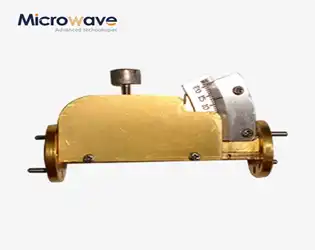
Understanding Waveguide Attenuators: Fixed and Variable Types Explained
May 29, 2026
Waveguide attenuators are very important parts of current RF and microwave systems because they precisely control the power levels of signals. Procurement experts, technical buyers, and system integrators can make smart choices about where to buy things when they know the basic differences between fixed and variable waveguide attenuators. A waveguide variable attenuator can lower signals by any amount, from 0 dB to 60 dB or higher. This allows for dynamic power management in mission-critical settings like radar calibration, satellite ground station testing, and high-frequency measurement setups where signal integrity must be maintained at all times.