





BLOG
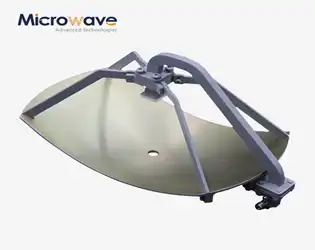
Microwave Parabolic Antenna Design Guide
May 26, 2026
A microwave parabolic antenna guides electromagnetic waves with a curvy parabolic reflector. This lets high-gain signals travel and be received across UHF and SHF bands. These antennas are widely used in radar systems, 5G backup, and satellite communications. They turn circular waves into collimated beams by carefully placing the feed at the reflector's focus point. Their high level of directivity solves important problems like weak signals over long distances, crowded airwaves, and limited bandwidth in mission-critical wireless infrastructure. Procurement teams can find solutions that meet strict performance standards if they understand the basics of how they were designed.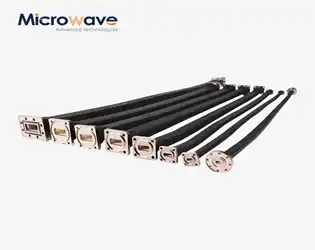
Choosing the Right Flexible Twistable Waveguide
May 26, 2026
Choosing the right flexible twistable waveguide can make or break how well your radio system works. Because they can bend and twist axially at the same time, these precision-engineered parts solve a basic problem that fixed waveguides can't: they keep the signal integrity in high-frequency settings. The right waveguide choice affects system reliability, installation efficiency, and long-term operational costs. This is true whether you're routing RF signals around obstacles in a satellite ground station, adjusting for mechanical vibration in naval radar systems, or taking into account thermal expansion in aerospace platforms. At Advanced Microwave Technologies Co., Ltd., we've seen buying teams have a hard time choosing parts that meet the needs of different uses while also being affordable and performing well electrically.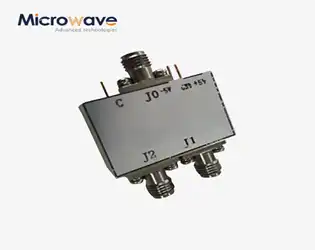
Low Insertion Loss High Power Coaxial Switches: Benefits and Uses
May 25, 2026
Choosing the right switching component is very important when making RF systems for defense radar, satellite ground stations, or radio receivers. It can make or break the system's ability to meet mission-critical dependability standards. A high power coaxial switch designed for low insertion loss is the core of precise signal switching. It makes it possible to switch between send and receive lines without any problems, even when the power level is very high. These special devices can handle power levels ranging from hundreds of watts to multiple kilowatts without heating failure, arcing, or impedance problems. This is something that regular RF switches can't do in harsh operating conditions where performance errors are very small.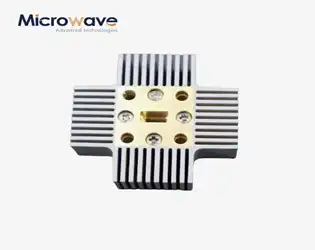
Waveguide Pressure Window for High Power Microwave
May 25, 2026
In high-power microwave devices, a waveguide pressure window acts as a sealed divider that lets electromagnetic energy pass through while keeping the surroundings separate. This part makes a shield between areas with different air pressures, usually separating areas that are pressurized on the inside from areas that are not pressurized or from vacuum settings, while keeping signal loss to a minimum. When used with a lot of power, these windows keep the dielectric from breaking down, keep wetness out, and keep the structure strong even when the temperature and pressure are very different. Because they are made in a way that balances mechanical strength with electromagnetic openness, radar systems, industrial heating equipment, and satellite communication infrastructure can't work without them.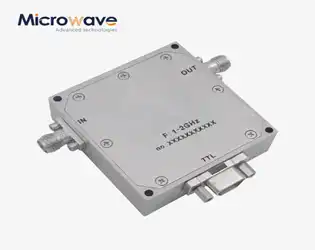
How a Phase Shifter Enhances Signal Processing Efficiency
May 25, 2026
A digital phase shifter changes the way signals are processed by using logic-driven switching processes to give exact, repeatable control over signal phase angles. A digitally controlled phase shifter uses discrete phase states that are controlled by TTL or CMOS logic inputs instead of a constant voltage setting that can be affected by drift and noise in the environment. In mission-critical settings like phased array radar, 5G beamforming networks, and satellite ground stations, this design removes the need for human tuning and provides response times in the microsecond range. The result is a more reliable system with better signal integrity and easier inclusion into automatic RF circuits that must work consistently even when temperatures are very high or very low.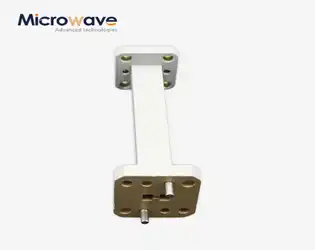
Best Waveguide Transition Types for Automotive Assembly Workshop
May 21, 2026
Waveguide Transitions became essential passive microwave devices for vehicle assembly factories' precision RF testing and signal integrity. These pieces enable rectangular waveguides, coaxial cables, and flat microstrip circuits to connect with minimum signal bounce and insertion loss. Car radar testing, 77 GHz collision avoidance system calibration, and V2X transmission validation stations require the right Waveguide Transition. It impacts measurement precision, manufacturing speed, and equipment reliability. Modern auto manufacturing increasingly uses millimeter-wave technology from the X to W bands. Transitions can correct crucial impedance mismatches, maintain electromagnetic mode purity, and make mechanical communication between large test equipment and tiny vehicle modules easier when properly built. Leading companies like Advanced Microwave Technologies Co., Ltd. provide unique solutions with ISO 9001 certification and over 20 years of RF engineering experience. Procurement teams receive parts that fulfill high-quality automobile criteria.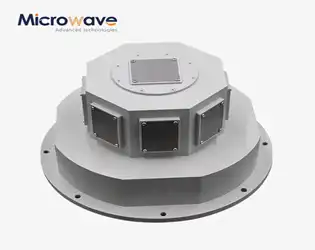
How does a slotted waveguide antenna work?
May 21, 2026
A slotted waveguide antenna works by carefully cutting holes in the walls of a cylinder or rectangular waveguide. This turns the sealed structure into a directed reflector. As electromagnetic waves pass through the circular metal waveguide, they create currents around the holes. These currents then act as magnetic dipoles, sending energy into space. Engineers can exactly control the antenna's radiation pattern and beam direction by changing the slot's size, spacing, and position along the waveguide. This makes it very efficient in high-frequency microwave and millimeter-wave uses.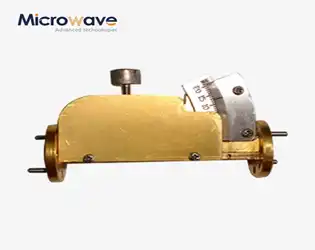
Variable Attenuator in Microwave Calibration Tips
May 21, 2026
The variable attenuator in microwave systems is an important part of precise microwave tuning. It lets engineers handle signals accurately in a wide range of complex RF applications. Unlike their fixed peers, variable attenuators can be changed dynamically, which lets technical teams fine-tune signal intensity in real time. This makes sure that testing processes meet the strict needs of satellite communications, radar systems, and flight applications. This flexibility immediately leads to less measuring error and higher system stability, both of which are very important for procurement managers who are looking at parts for deployments that are mission-critical.