





BLOG
Quadrifilar Helix Antennas offer Advantages for RFID Readers
April 24, 2026
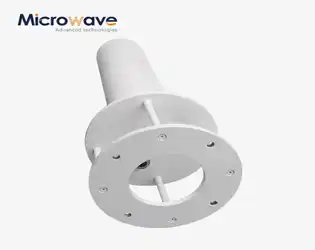
Looking for the best antenna for RFID reader systems? The quadrifilar helix antenna is the best quadrifilar helix antenna choice for business-to-business uses that need reliable tag recognition that doesn't change. This special four-arm helical structure sends out circularly polarized radiation patterns that reduce direction sensitivity and multi-path interference, two problems that industrial RFID operations keep running into. The QHA keeps the signal strong over a wider range of angles than traditional patch or monopole antennas, which can have trouble in places with metallic surfaces or tags that don't always face the same way. This means that there are fewer missed reads and higher throughput in logistics, aerospace, and defense applications. We at Advanced Microwave Technologies Co., Ltd. have seen buying teams from both Fortune 500 companies and defense contractors use QHA solutions when normal antennas don't meet performance standards that are important for mission-critical tasks.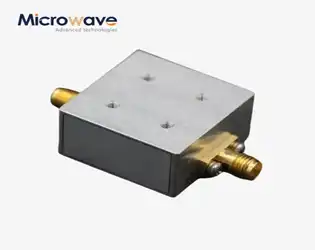
KiCad: How to draw a curved coplanar waveguide
April 23, 2026
Drawing a curved coplanar waveguide (CPW) in KiCad begins with understanding that this planar transmission line features a central signal conductor flanked by two ground planes on the same substrate layer. The process involves setting up precise PCB parameters, defining substrate properties, and using KiCad's arc and track editing CPW waveguide tools to create smooth bends while maintaining consistent gap-to-width ratios essential for impedance control. Unlike microstrip designs, the CPW waveguide eliminates the need for vias to ground components, making curved layouts particularly advantageous in compact, high-frequency applications where signal integrity and space efficiency are paramount.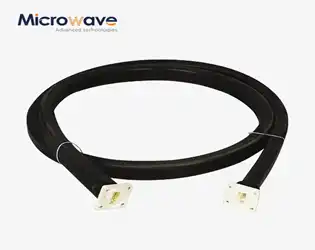
April 23, 2026
Walk into any radar facility, satellite ground station, waveguide assembly, or aerospace testing lab, and you'll notice something interesting: massive antennas connected not by the thin coaxial cables you see behind your TV, but by robust metallic tubes and precisely engineered components. These are waveguide assemblies—the unsung champions of high-frequency signal transmission. When you're working with frequencies above 18 GHz, where coaxial cables simply can't handle the power or prevent signal loss, waveguide assemblies become absolutely essential. Over my two decades in the microwave industry at Advanced Microwave Technologies Co., Ltd, I've watched these components evolve from simple hollow tubes into sophisticated systems that power everything from weather monitoring satellites to defense radar arrays. This article breaks down exactly what waveguide assemblies are, why they matter, and how they solve critical engineering challenges that modern technology demands.
How RF Rotary Joints Improve Signal Quality in Wireless Communication
April 23, 2026
In wireless communication devices, RF rotary joints keep the signal flowing between parts that are fixed and parts that are moving. Through specialized coaxial or waveguide connections, the RF rotary joint working principle is to maintain impedance matching across the rotating contact. This electromagnetic coupling sends energy without twisting the wire, which keeps the signal from getting weaker during constant spinning. These parts stop echoes and power loss by keeping the impedance constant, which is usually 50Ω for coaxial systems. This means that the signal stays stable even when the antennas spin very quickly. This makes them essential for radar antennas, satellite ground stations, and other mission-critical wireless infrastructure that can't risk being unreliable. Wireless transmission networks need parts that work the same way, even when the mechanical conditions change. More and more, procurement teams and design engineers are under pressure to find RF components that can keep the signal integrity while spinning. This is a problem that has a direct effect on running costs, system uptime, and data throughput. This guide talks about how RF rotor joints fix important signal quality issues, contrasts different technologies, and gives B2B buyers looking for long-term dependability selection criteria they can use.
What is the purpose of a power divider?
April 22, 2026
In the dangerous field of RF and radio engineering, knowing what a power divider does is essential for making transmission systems that work well. A power divider splits an entering electromagnetic signal into several output lines while keeping the amplitude and phase connections under control. The Waveguide Power Divider is the best choice for high-frequency uses above 10 GHz, like satellite communications, phased array radar, and 5G infrastructure. Waveguide-based dividers are better at handling power than coaxial or planar options. They have less insertion loss and are very stable at high temperatures in mission-critical settings. It's helpful for engineering and procurement teams to understand not only the technical principles but also the strategy sourcing issues that affect how well systems work and how long projects take.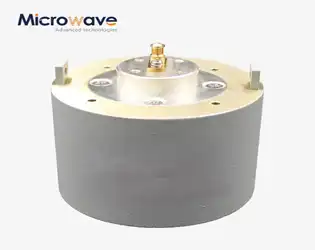
How does a spiral antenna work?
April 22, 2026
When procurement spiral antenna engineers evaluate RF components for mission-critical radar, satellite telemetry, or electronic warfare systems, they often encounter a persistent challenge: conventional antennas that operate efficiently across narrow bandwidths force system designers to integrate multiple antenna arrays, increasing Size, Weight, and Power (SWaP) constraints and integration complexity. A spiral antenna addresses this industrial pain point by leveraging frequency-independent geometry to maintain consistent impedance and radiation characteristics across multi-octave bandwidths—often spanning 10:1 frequency ratios or greater. Unlike resonant structures tuned to specific wavelengths, the spiral configuration radiates from an active region that shifts along the antenna arms as frequency changes, enabling a single aperture to replace multiple narrowband elements while delivering inherent circular polarization essential for mitigating multipath fading in mobile aerospace platforms.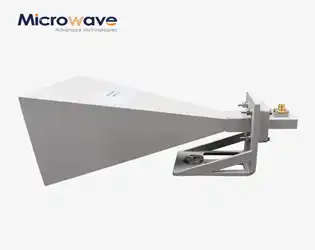
Learning About Microwave Horn Antenna for Everyday Applications
April 22, 2026
When engineers and sourcing experts look for high-precision RF parts, the microwave horn antenna always comes up as a key technology that connects theoretical physics with real-world system integration. These flared waveguide structures change electromagnetic energy that is contained into guided radiation in free space. This makes it possible for radar calibration labs and satellite base stations. Technical buyers can choose parts that meet strict performance standards while staying within budget and meeting delivery deadlines if they understand how they work, how designs can vary, and what to think about when buying them.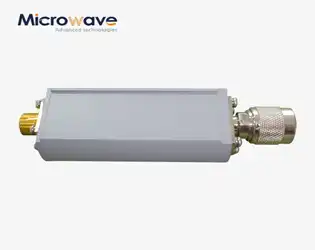
Coaxial Detector vs Planar Detector: Which One Is Better for Nuclear Research
April 21, 2026
When selecting detection technology for nuclear research applications, the coaxial detector generally outperforms planar detectors in scenarios demanding superior energy resolution and extended counting capacity. Coaxial configurations utilize cylindrical geometry that maximizes active detection volume while minimizing dead zones, making them particularly effective for gamma-ray spectroscopy in nuclear physics laboratories. Their three-dimensional charge collection architecture delivers enhanced sensitivity across broader energy spectra, which proves invaluable when researchers analyze complex isotopic signatures or measure low-activity samples requiring prolonged acquisition times.