





BLOG
Rigid vs Flexible Waveguide Assembly: Which One Should You Use
April 28, 2026
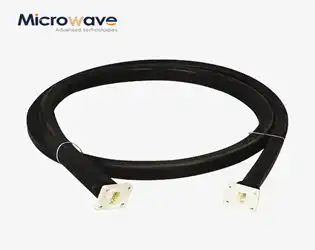
Your individual application needs will determine whether a rigid or bendable waveguide assembly is best for you. Rigid waveguides provide better electrical performance with low insertion loss. They work especially well in fixed sites that need to handle a lot of power, like radar systems and ground-based satellite stations. Flexible waveguides can be mechanically changed to fit different situations. This lets them route through tight areas and dampen vibrations in moving platforms like ships and airplanes. To get the most reliable system, you should choose a product that balances electrical performance measures like insertion loss, VSWR, and power capacity with installation limitations, environmental conditions, and long-term upkeep needs.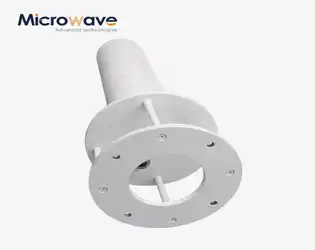
Which is better, a helix antenna or a patch antenna?
April 28, 2026
The answer depends on your specific application. A quadrifilar helix antenna excels in satellite communications, GPS navigation, and UAV systems due to its omnidirectional coverage, circular polarization, and resistance to multipath interference. Patch antennas, conversely, suit cost-sensitive, space-constrained applications like IoT sensors and WLAN devices where directional gain and compact form factors matter most. B2B procurement teams must evaluate radiation patterns, polarization needs, environmental durability, and integration complexity to match antenna performance with operational demands and budget realities.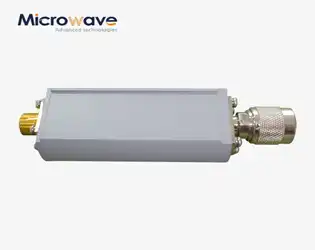
How to Choose the Right Coaxial Detector for Gamma Spectroscopy
April 27, 2026
To choose the best Coaxial Detector for gamma spectroscopy, you need to know exactly what you need it for, such as energy resolution, sensing efficiency, and the setting in which it will be used. These special tools turn high-frequency gamma radiation into signals that can be measured. This makes it possible to accurately identify isotopes in study, commercial, and nuclear settings. When B2B procurement teams make a choice, they have to weigh technical performance measures like sensitivity and noise characteristics against practical factors like provider trustworthiness, the ability to customize, and long-term support. To make smart decisions, you need to look at the detector shape, the quality of the semiconductor material, the calibration methods, and how well the new system will work with your current spectroscopy setup. This will help you get the most accurate measurements at the lowest cost.
Why Choose a Waveguide Circulator?
April 27, 2026
Picking the appropriate directional control part is very important when creating RF and microwave systems that need to be very reliable. A waveguide circulator is an inactive, one-way device that uses ferrite materials and a magnetic field to send data in a certain order through its ports, which are usually three or four. Compared to coaxial options, these parts can handle much higher power levels and still have very low insertion loss, often less than 0.5 dB. Because they keep emitters from getting reflected power, they protect sensitive equipment in radar, satellite ground stations, and commercial microwave uses. Knowing why these devices work so well in mission-critical settings helps buying teams make smart choices that extend the life of systems and improve business efficiency.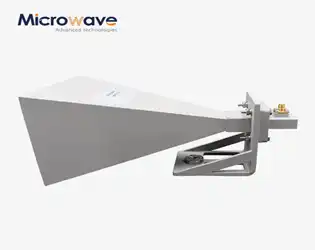
How do microwave antennas work?
April 27, 2026
Microwave antennas work well from 1 GHz to 100 GHz and can change electromagnetic energy between directed waves and free-space radiation. At their heart, these devices change signals from microwave horn antenna transmission lines or waveguides into focused beams that can be used for testing, communication, or tracking. The microwave horn antenna is a good example of this process because it has a flared waveguide design that slowly grows to match the resistance of empty space while keeping echoes to a minimum. This shape lets you control the radiation patterns and predict the gain features. Because of this, horn designs are essential in places like precision measurement labs, aerospace systems, satellite ground stations, and places where signal integrity directly impacts mission success.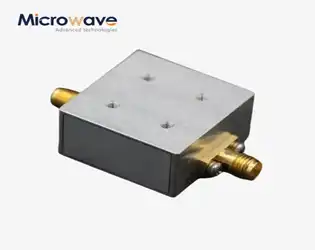
Coplanar Waveguide Design for Your RF PCB
April 24, 2026
Coplanar waveguide transmission line designs are an important part of current RF printed circuit board design, especially for high-frequency uses like radar systems, satellite communications, and advanced telecom infrastructure. A coplanar waveguide is different from traditional microstrip designs because it puts the signal line and ground planes on the same PCB surface. This gives you more control over how the electromagnetic field is distributed and reduces the amount of energy that is lost. This way of designing has measured benefits in terms of impedance consistency, heat management, and how easy it is to integrate with surface-mount components. These benefits are very important when your application needs to reliably send signals from the X-band to the Ka-band.
Comparing Waveguide vs. Coaxial Power Dividers: Advantages and Use Cases
April 24, 2026
When selecting between waveguide and coaxial power dividers for mission-critical RF systems, understanding their fundamental differences determines system reliability and performance. Waveguide power dividers excel in high-frequency applications above 18 GHz, offering superior power handling and minimal insertion loss for radar and satellite communications. Coaxial dividers provide compact, cost-effective solutions for lower frequencies with broader Waveguide Power Divider bandwidth capabilities. The choice depends on your frequency range, power requirements, environmental conditions, and space constraints—factors directly impacting procurement decisions in defense, aerospace, and telecommunications sectors.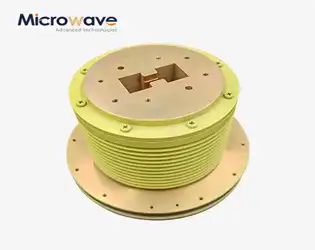
Future of the Rotary and RF Rotary Joints Industry
April 24, 2026
The rotary joint and RF rotary joint industries are going through a big change because of faster technology needs in the medical, telecommunications, aircraft, and defense industries. As systems get more complex, like phased array radars and next-generation satellite groups, it's more important than ever to send precise signals while the system is rotating all the time. RF rotary joints make it possible for microwave and millimeter-wave signals to be sent seamlessly between platforms that are still and platforms that are moving. This ensures mission-critical performance in places where high-frequency capability, low insertion loss, and dependability are essential.