





BLOG

What is the bandwidth of a quadrifilar helix antenna?
April 21, 2026
Bandwidth is often one of the most important things to look at when comparing antennas for satellite communications, GNSS tracking, or aerospace data. A quadrifilar helix antenna usually has a fractional bandwidth between 5% and 20%, but more modern versions can cover a wider area. This bandwidth describes the range of frequencies where the antenna works well, with a VSWR of less than 2:1 and an axial ratio of less than 3 dB. The four-arm helical shape quadrifilar helix antenna and precise phase quadrature input (0°, 90°, 180°, 270°) make it possible for stable circular polarization over this operating range. Unlike narrowband patch antennas, quadrifilar helix antennas are small and can work with multiple frequencies. This makes them very useful in UAV tracking modules or handheld satellite stations where space is limited but spectrum flexibility is needed.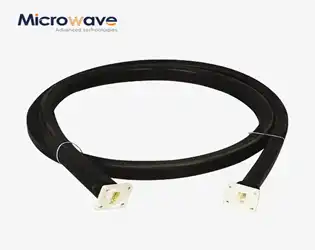
Waveguide Assembly Explained: Components, Types, and Industrial Applications
April 21, 2026
A waveguide assembly is a special kind of high-frequency transmission line that is made to direct electromagnetic energy with little loss. It is usually made up of thin metal tubes made of copper, aluminum, or brass that guide waves by reflecting them inside the tube. In defense, satellite communications, and radar systems where stiff or flexible structures need to handle high power at microwave and millimeter-wave frequencies, these units are a must. For mission-critical systems requiring dependability and accuracy across bands from 0.5 GHz to 110 GHz and beyond, waveguide assemblies are the best option because they outperform coaxial lines in terms of power handling and signal integrity.
Broadband and compact rectangular waveguide twist by using rigid waveguide
April 20, 2026
Broadband and compact rectangular waveguide twists using rigid waveguide construction represent a critical evolution in RF transmission technology. These components enable precise polarization rotation—typically 90° or 180°—within constrained physical envelopes while maintaining exceptional electrical performance across wide Waveguide Twist frequency bands. By employing solid metallic construction rather than flexible alternatives, rigid waveguide twists deliver superior power handling, minimal insertion loss (often ≤0.1dB), and consistent mechanical stability essential for mission-critical aerospace, defense, and satellite communication applications where signal fidelity and long-term reliability cannot be compromised.
Top RF Rotary Joints for Reliable Satellite Ground Station Connectivity
April 20, 2026
Maintaining uninterrupted data transmission during antenna rotation is a big engineering problem for satellite ground stations that follow moving satellites across the sky. RF rotary joints solve this issue by sending radio frequency messages between parts that are still and parts that are moving without any loss. In order to ensure signal continuity, the rf rotary joint working principle even during constant 360-degree rotation, the rf rotary joint working principle focuses on keeping precise impedance matching across the rotational interface through specialized coaxial or waveguide connections. These parts are necessary for tracking, radar systems, and satellite communication, where sending signals reliably and with little loss is very important.
What is the difference between microstrip and coplanar waveguide?
April 20, 2026
In RF and microwave systems, microstrip and coplanar waveguides are two different types of communication lines. In contrast to a coplanar waveguide, which places the signal conductor and ground planes on the same substrate surface, a microstrip coplanar waveguide has a single conductor trace on top of a dielectric substrate with a ground plane on the bottom. Impedance control, manufacturing difficulty, signal integrity, and total system performance are all affected by this basic structural difference. When buying teams and design engineers know these differences, they can make choices that improve both technical results and manufacturing efficiency in mission-critical applications.
Analysis and Design of a Diplexing Power Divider for Ku-Band Satellite Applications
April 17, 2026
Diplexing power dividers are an important part of modern Ku-band satellite communication systems because they let you send and receive data at the same time through a single antenna interface. At the heart of these systems is the Low Ku Band Diplexer, a carefully designed part that works in the 10.7–12.75 GHz range. This device handles signal routing based on frequency by combining complementary filter networks, usually low-pass and high-pass configurations, that keep uplink and downlink channels separate while maintaining strict isolation thresholds above 70 dB. The design makes sure that there is very little insertion loss (less than 0.5 dB), which keeps the signal integrity across the whole operational bandwidth for mission-critical uses in VSAT terminals, satellite ground stations, and communication platforms in the air. Defense contractors and people who put together satellite systems are asking for more and more diplexing solutions that balance how well they work electrically with how tough they are mechanically. Technical teams that have to choose parts for next-generation satellite networks need to understand the engineering trade-offs, procurement variables, and new design methodologies.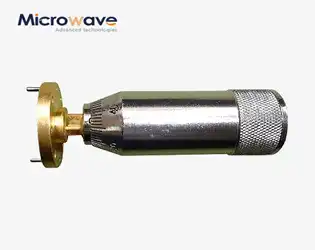
How Industrial Microwave Sliding Short Improves Microwave System Tuning
April 17, 2026
Impedance matching that isn't good is often to blame when engineers Industrial Microwave Sliding Short have problems with their RF systems that don't deliver power consistently or have standing wave ratios that they can't predict. An Industrial Microwave Sliding Short is a precise waveguide tuning part that changes the reflection point in the transmission line mechanically. Moving a conductive plunger along the axis of the waveguide changes the length and phase of the electrical paths that signals reflect. Engineers can get almost perfect impedance matching in real time with this dynamic adjustment. This keeps sensitive magnetrons safe from reflected power damage and increases the efficiency of energy transfer. In contrast to fixed terminations, sliding shorts allow for variable reactance control. This makes them essential in automated tuning networks and high-power industrial microwave applications where load conditions change all the time.
How to optimize the performance of an antenna diplexer?
April 17, 2026
To get the most out of an antenna diplexer, you need to carefully choose the parts, install them correctly, and keep an eye on the whole system. When working with things like the Low Ku Band Diplexer, Low Ku Band Diplexer which works at frequencies between 10.7 GHz and 12.75 GHz, it's important to keep insertion loss as low as possible (ideally ≤0.5 dB), port-to-port isolation as high as possible (≥70 dB), and impedance matching across the whole operating bandwidth. Thermal management is also very important, especially for systems that handle up to 200W of power, since changes in temperature from -40°C to +85°C can change the way filters work. Regular testing with vector network analyzers and following strict installation procedures greatly increases the life of diplexers while keeping the integrity of signals in radar and satellite communication applications.