





BLOG
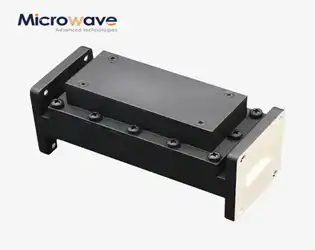
Waveguide Band Stop Filter Performance Optimization
May 6, 2026
Improving the performance of Waveguide Band Stop Filters is a smart way to make sure that signals in important RF and microwave systems stay intact. The Waveguide Band Stop Filter is a passive part that uses resonant cavity technology to specifically cut down on unwanted frequency bands while keeping the passband sounds very good. This process of optimization includes choosing the right materials, making sure the shapes are correct, managing heat stability, and modeling electromagnetic fields to get rid of sources of interference that slow down the system. Optimized band stop filters provide rejection depths of more than 60 dB with an insertion loss of less than 0.2 dB. This directly leads to better receiver sensitivity and transmitter efficiency in defense radar systems, satellite ground stations, and aerospace communication networks.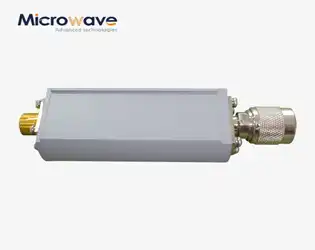
Coaxial Detector for Nuclear Power Plants: Key Features and Selection Tips
April 30, 2026
When nuclear power plants need to watch signals and find radiation with pinpoint accuracy, choosing the right RF detector technology is a mission-critical choice. A Coaxial Detector is a special kind of RF sensor that reliably turns high-frequency microwave signals into DC or low-frequency outputs that can be measured. Compared to optical or basic diode detectors, these ones have better frequency response, better noise insulation, and the durability needed for nuclear settings where safety is very important. Advanced Microwave Technologies Co., Ltd. has designed Coaxial Detectors for these tough uses, mixing point contact diode technology with precisely matched microwave circuits to make sure signal integrity in situations where failure is not a choice.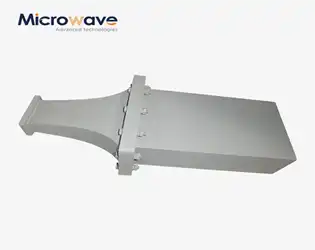
Double Ridge Waveguide Versus Typical Waveguide
April 30, 2026
When choosing microwave transmission parts for wideband systems, the difference between normal rectangular waveguides and double ridge waveguide designs \ determines the structure of the system, double ridge waveguide, and the limits of its performance. The double ridge waveguide has metallic ridges that stick out from the wide walls. This creates a capacitive loading effect that lowers the dominant mode's cutoff frequency while keeping the waveguide's small size. This shape allows multi-octave bandwidth ratios to reach 2.4:1 to 3.6:1, which is higher than the 1.5:1 limit of regular rectangle guides. For procurement teams looking for parts for electronic warfare pods, wideband radar feeds, or RF test systems that need to cover all frequencies without mechanical switching, this structural difference directly means less system complexity, lower integration costs, and more operational flexibility from the C-band to the Ka-band.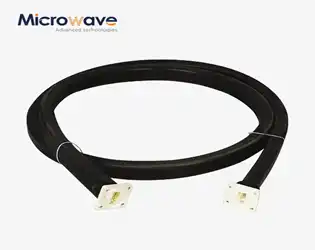
High Power Waveguide Assembly for Satellite and Radar Systems: Complete Guide
April 30, 2026
Modern satellite communication and radar systems are built around high-power waveguide assembly systems, which send electromagnetic data very efficiently at microwave and millimeter-wave frequencies. These special transmission lines are made up of thin metal tubes that are usually copper, aluminum, or brass. They let electromagnetic waves pass through them with little loss through internal reflection. Engineers and procurement teams depend on these units to handle kilowatts of RF power while keeping the purity of the signal in defense, aerospace, and telecommunications applications that need to be reliable and cannot be compromised.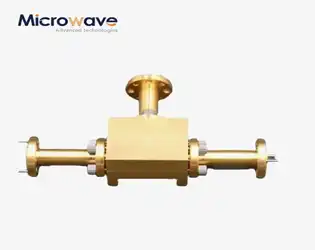
How to Test and Maintain Waveguide Power Dividers for Optimal Performance
April 29, 2026
Testing and maintaining waveguide power dividers requires systematic protocols combining precision measurement equipment with scheduled preventive care. These passive RF components split electromagnetic signals across multiple output paths while preserving signal integrity through controlled insertion loss and isolation. Proper testing involves vector network analysis to measure return loss, insertion loss, isolation, and phase balance against manufacturer specifications, while maintenance encompasses routine inspections, environmental monitoring, and timely cleaning to prevent contamination-induced degradation. Implementing structured testing procedures alongside proactive maintenance schedules ensures mission-critical systems in satellite communications, radar applications, and telecommunications infrastructure maintain peak performance throughout their operational lifecycle.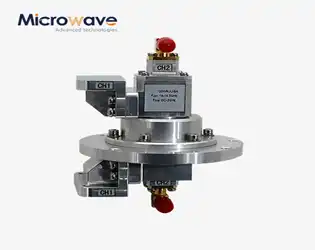
How to Select an RF Rotary Joint
April 29, 2026
To choose the best RF rotary joint, you need to carefully think about the technical specs, the needs of the application, and the supplier's abilities. An RF rotary joint is a precise electromechanical device that keeps high-frequency signals moving between parts that are still and parts that are moving while maintaining resistance continuity. To be successful in buying, you need to make sure that the frequency range, power handling, insertion loss, and VSWR traits are all right for your radar, satellite communication, or testing system. Long-term dependability is ensured in mission-critical uses in the aerospace, military, and telecoms sectors by knowing about mechanical longevity, environmental ratings, and customization options.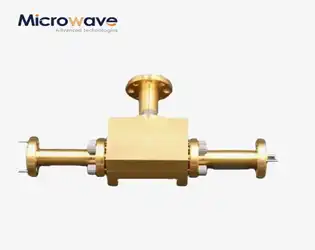
High Power Waveguide Power Dividers for Radar Systems: Design and Applications
April 29, 2026
It is very important for current radar devices to be able to send out high-power RF signals accurately and reliably. High power Waveguide Power Divider units are the most important part of sharing electromagnetic energy across multiple transmission routes while keeping signal integrity, phase coherence, and low insertion loss. These inactive parts make it possible for phased array radars, fire-control systems, and weather tracking radars to work at their best, even when they are under a lot of stress from the environment and heavy power loads. Waveguide power dividers are much better than their coaxial cousins at handling megawatts of pulsed energy and kilowatts of continuous wave power without breaking down or losing signal quality.
Basic Introduction to Power Amplifier
April 28, 2026
Power amplifiers are an important part of current precision engineering, industrial testing, and telecommunications equipment. At their core, an AC Power Amplifier functions as a customizable power source that can produce stable, variable-frequency AC signals with great accuracy. Unlike regular utility power, these specialized tools either recreate a clean grid or purposely add voltage errors. This lets engineers test how well equipment works when it's put under real-world electrical stress. AC power amplifiers are essential for crossing the gap between low-level signal output and high-power application needs. They can do this whether they are simulating 400Hz avionics bus power, testing EV charging systems against unstable grid scenarios, or running electrodynamic shakers for vibration analysis.