





BLOG
Waveguide Bandpass Filter Design for Automotive Workshop
May 12, 2026
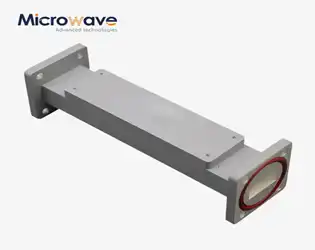
The main goal of Waveguide Bandpass Filter design for auto shops is to get accurate frequency selection in the current cars' mission-critical radar and radio systems. For advanced driver assistance systems (ADAS), collision avoidance radar, and vehicle-to-everything (V2X) transmission modules, these hollow metallic structures let signals within set passbands pass through with little loss while blocking unwanted interference. Waveguide implementations are better at handling power and staying cool than traditional coaxial or microstrip options. They can handle the harsh electromagnetic conditions found in car testing and integration facilities. During the development and production steps, workshop engineers use these filters to check the performance of RF subsystems, make sure they meet regulatory requirements, and fix problems with signal integrity.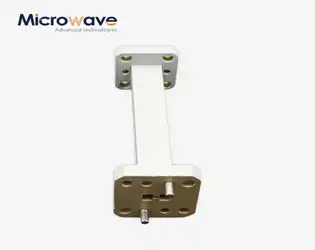
Why Use Waveguide Transition in Automotive Assembly Workshop
May 12, 2026
Waveguide transitions serve as precision interface components bridging different RF transmission line geometries in automotive assembly settings, delivering unparalleled signal integrity during radar and sensor module testing. These specialized devices solve impedance mismatch challenges while maintaining minimal insertion loss, ensuring that automated driving assistance systems and collision avoidance technologies meet stringent performance benchmarks. Within modern automotive manufacturing, waveguide transitions facilitate accurate verification of millimeter-wave components operating at X-band and higher frequencies, directly impacting vehicle safety certification and production throughput.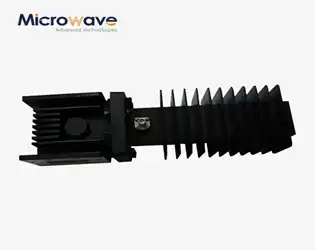
Waveguide Isolator Applications in Automotive Assembly Systems
May 11, 2026
Modern automotive assembly systems increasingly rely on advanced microwave and RF technologies to ensure precision, reliability, and quality control throughout production processes. At the heart of these systems lies a critical component: the waveguide isolator. This passive, non-reciprocal device permits electromagnetic signal propagation in one direction while absorbing energy traveling in reverse, functioning essentially as a "microwave diode." Within automotive manufacturing environments—where radar sensor calibration, LIDAR testing, and RF system validation occur continuously—waveguide isolators protect expensive test equipment from reflected power and impedance mismatches that could cause signal instability or catastrophic equipment failure. Their deployment ensures repeatable measurement accuracy, minimizes production downtime, and safeguards the integrity of mission-critical testing infrastructure that underpins today's connected, autonomous vehicle technologies.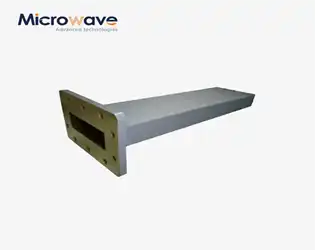
Waveguide Termination vs Load: Key Differences Explained
May 11, 2026
Knowing the difference between Waveguide Terminations and waveguide loads is very important when choosing parts for high-frequency RF and microwave systems. It can have a big effect on how well and how reliably the system works. A Waveguide Termination is made to take in electromagnetic energy with little rebound. It matches the impedance of the waveguide to almost completely get rid of Standing Wave Ratio (SWR) problems. Waveguide loads, on the other hand, have wider uses, such as dissipating energy during testing and tuning. Both parts keep harmful mirrored power away from sensitive sources like Traveling Wave Tube Amplifiers (TWTA) and magnetrons, but their design goals, material choices, and use situations are very different. This piece explains these differences so that procurement managers, RF engineers, and system designers can make smart choices about where to get microwaves for defense, satellite communications, and industrial uses.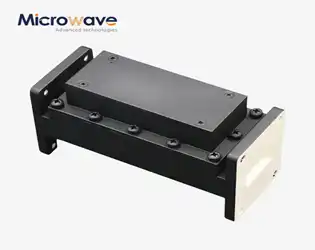
High Precision Waveguide Band Stop Filter Supplier
May 11, 2026
Advanced Microwave Technologies Co., Ltd. (ADM) has been making precision-engineered waveguide parts that solve important problems in RF and microwave systems for more than 20 years. Our Waveguide Band Stop Filters, which are also called notch or band reject filters, specifically cut down on certain frequency bands while keeping the signal integrity in passbands around them. Defense companies that need to deal with co-site interference, satellite operators that need to get rid of harmonic distortion in uplink chains, and research institutions that need measures that can be tracked and repeated all need these high-performance parts. Our waveguide designs use air-dielectric construction and precise machining to provide excellent Q-factors, low insertion loss, and great heat stability for mission-critical applications, unlike coaxial options that tend to break down under high power.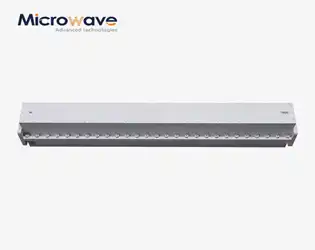
OEM Waveguide Harmonic Filter for Assembly Workshop
May 9, 2026
When assembly workshops demand precision RF signal management, the waveguide harmonic filter emerges as the technical workhorse behind spectral purity and regulatory compliance. These passive microwave components integrate directly into high-frequency transmission lines, suppressing unwanted harmonic frequencies generated by high-power amplifiers while preserving the fundamental frequency with minimal attenuation. Unlike basic coaxial alternatives, waveguide harmonic filters leverage the cutoff properties of waveguide structures—often featuring corrugated internal geometries—to achieve rejection levels exceeding 60 dB. At Advanced Microwave Technologies Co., Ltd (ADM), we specialize in OEM solutions tailored for assembly workshops, combining two decades of engineering expertise with ISO 9001 certification to deliver filters that solve critical pain points: spurious emissions violating FCC masks, interference in dense SATCOM environments, and protection of sensitive downstream components from high-energy harmonic signals.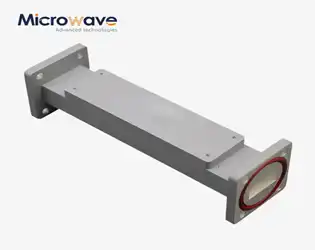
What Is Waveguide Bandpass Filter in Automotive Workshop?
May 9, 2026
A waveguide bandpass filter is a precision-engineered RF component designed around hollow metallic transmission structures to permit specific frequency ranges while rejecting unwanted signals. In automotive workshop contexts, these filters play an increasingly vital role in testing and calibrating advanced driver assistance systems (ADAS), collision avoidance radar, and vehicle-to-everything (V2X) communication modules. The technology leverages high Q-factor resonant cavities to deliver exceptionally low insertion loss and superior power handling, making them indispensable for workshop environments where measurement accuracy directly impacts safety certification and system validation.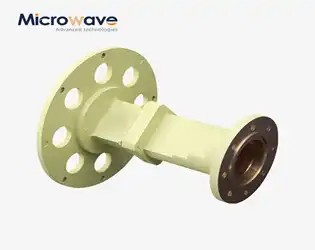
How Waveguide Transition Works in Automotive Assembly Workshop
May 9, 2026
In shops that put together cars, the Waveguide Transition is an important part for matching impedances that connects different types of transmission lines in radar and sensor systems. These connectors were carefully designed to change electromagnetic signals between waveguides and microstrip circuits or Waveguide-to-Coaxial assemblies without affecting the purity of the signals. Using tapered geometries or stepped matching sections, Waveguide Transitions keep the Voltage Standing Wave Ratio (VSWR) low and reduce insertion loss across operational frequency bands (usually 24GHz for blind-spot detection and 77GHz for long-range automotive radar). This makes sure that Advanced Driver Assistance Systems (ADAS) get the clear signals they need to accurately detect objects and avoid collisions.