





BLOG
Everything you need to know about Horn Antenna
May 8, 2026
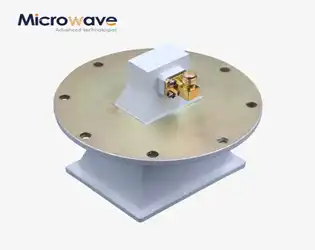
Microwave horn antennas are one of the most effective and flexible ways to communicate over high frequencies. These very directed devices work in the 1–100 GHz range and have a curved waveguide structure that moves electromagnetic energy from waveguide modes that are confined to free space. Horn antennas have high gain, low standing wave ratios (VSWR), and consistent radiation patterns compared to wide or patch antennas. Different types of horns, like pyramidal, conical, and curved ones, are used for different tasks, such as satellite ground stations, aircraft radar, and antenna measurement calibration. Their strong metal structure, usually made of aluminum or copper alloys, makes them last in harsh settings and keep the integrity of precision signals for use in defense, telecommunications, and industrial research.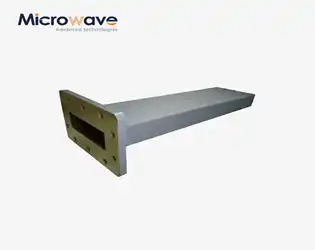
Waveguide Termination Design Guide for Workshop Systems
May 8, 2026
When making workshop systems for high-frequency RF and microwave uses, picking the right waveguide termination is an important engineering choice that has a direct effect on how well and how reliably the system works. A waveguide termination acts as a matched load that absorbs electromagnetic energy moving through waveguide structures and turns it into heat. It also stops harmful reflections that could hurt sensitive transmitter parts like magnetrons, klystrons, and solid-state power amplifiers. The right waveguide termination design saves expensive equipment from reflected power, keeps signals intact, and allows accurate system calibration in testing settings that must not radiate.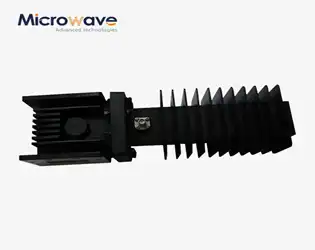
Waveguide Isolator Insertion Loss Explained for Workshop
May 8, 2026
When radio waves go through an isolator in a forward direction, the signal power goes down naturally. This is called Waveguide Isolator insertion loss. Procurement engineers, system planners, and workers who work with high-frequency microwave systems need to know about this important parameter. Insertion loss has a direct effect on system efficiency, link budgets, and total performance in a wide range of settings, from military radar sites to satellite ground stations. Waveguide Isolators protect signals by letting them flow in only one way and absorbing reflections. This is why insertion loss control is so important in mission-critical RF systems where every decibel counts for success.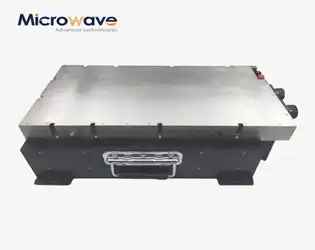
Troubleshooting: Why Is My AC Power Amplifier Not Working Properly?
May 7, 2026
When an AC Power Amplifier doesn't work the way it's supposed to, it affects whole testing procedures, production lines, and study schedules. This complex tool, which is meant to accurately and steadily produce variable-frequency power, becomes the problem that stops important work. Quickly diagnosing and fixing practical problems isn't just about fixing a device; it's also about getting your quality assurance, legal compliance, and research and development projects back on track, all of which depend on clean, reliable power amplification.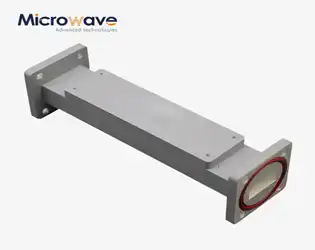
Waveguide Bandpass Filter Advantages in Industrial Systems
May 7, 2026
When industrial systems demand precision signal transmission across high-frequency microwave and millimeter-wave spectrums, waveguide bandpass filters deliver unmatched performance. These specialized RF components permit specific frequency bands to pass through while rejecting unwanted signals, ensuring electromagnetic integrity in mission-critical applications. Built from high-conductivity metals and leveraging air-dielectric waveguide structures, these filters achieve exceptionally low insertion loss, high power handling, and thermal stability—characteristics that coaxial or planar alternatives cannot replicate. Across aerospace radar, satellite ground infrastructure, and 5G backhaul networks, waveguide filtering technology remains the gold standard where reliability and signal purity define operational success.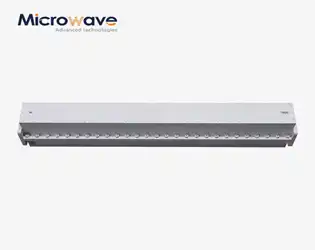
Waveguide Harmonic Filter Design for Automotive Workshop
May 7, 2026
Modern automotive systems increasingly demand precise RF signal management as vehicles transition into mobile communication hubs. A waveguide harmonic filter serves as a specialized passive component that suppresses unwanted harmonic frequencies while allowing fundamental signals to pass cleanly—critical for maintaining signal integrity in emerging automotive applications like vehicle-to-everything (V2X) communication, advanced driver-assistance systems (ADAS), and satellite-based connectivity. These filters leverage the unique cutoff properties of waveguide structures to achieve superior harmonic rejection compared to traditional coaxial designs, making them indispensable for automotive workshops integrating next-generation RF systems.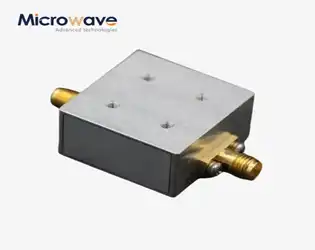
What are the advantages of a coplanar waveguide?
May 6, 2026
Coplanar waveguide technology is very good at improving performance for high-frequency uses, especially in microwave and millimeter-wave circuit designs. This planar transmission line structure has a center wire and two ground planes on the same substrate surface. Compared to traditional microstrip designs, this one allows for better impedance control, less radiation loss, and better signal integrity. The coplanar waveguide design makes production easier and provides excellent electromagnetic field confinement. This makes it the best choice for precision RF measurement applications, aerospace radar systems, and satellite communication equipment. Because it works with surface-mount parts and is easy to fit into small PCB plans, defense, telecommunications, and research institutions can't do without it when they buy things from other businesses today.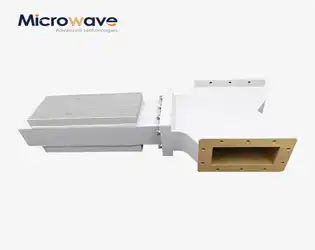
How Waveguide Isolator Improves System Stability in Workshop
May 6, 2026
Waveguide Isolators are very important safety parts in RF and microwave workshops because they allow signals to go only one way while collecting reflected energy that would otherwise make source equipment unstable. These non-reciprocal devices greatly lower frequency drift, keep signal distortion to a minimum, and extend the useful life of expensive test equipment by stopping harmful back-reflections from reaching sensitive amplifiers and oscillators. When Waveguide Isolators are built into calibration stations, antenna measurement systems, and prototype assembly lines, they create stable electromagnetic conditions that make measurements more accurate and cut down on expensive equipment failures.