





BLOG
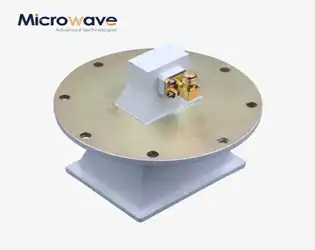
Pyramidal Horn Antenna Design: Gain and Bandwidth
August 20, 2026
When we discuss pyramidal horn antenna design, we're talking about precision engineering that directly impacts signal transmission quality in mission-critical applications. The design fundamentally revolves around optimizing two essential parameters: gain and bandwidth. These antennas serve as impedance transformers, gradually transitioning from rectangular waveguide geometry to free space, ensuring minimal signal reflection and maximum power transfer. The pyramidal structure expands in both E-plane and H-plane dimensions, creating a controlled aperture that determines directivity, radiation pattern, and frequency response. Choosing the right design parameters means balancing aperture dimensions, flare angles, and horn length to meet specific performance thresholds required by aerospace, defense, and satellite communication systems.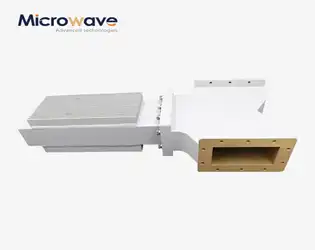
Low Insertion Loss Isolators for High-Power Fiber Systems
August 19, 2026
Low insertion loss isolators serve as essential protective devices in high-power fiber optic systems, engineered to permit forward signal propagation while blocking backward reflections that threaten sensitive laser sources. These passive optical components maintain minimal signal attenuation—typically below 0.8 dB—while delivering isolation levels exceeding 30 dB to prevent reflected light from destabilizing laser diodes or amplifiers. In demanding applications such as fiber laser manufacturing, telecommunications backbone infrastructure, and precision spectroscopy, selecting the appropriate isolator directly impacts system uptime, output stability, and equipment longevity. Understanding their operational principles and performance parameters enables procurement teams to make informed decisions that protect capital investments and ensure consistent optical power delivery.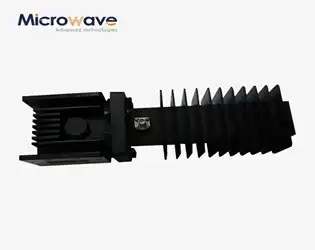
Low Insertion Loss Isolators: Key Specifications and Benefits
August 19, 2026
Low insertion loss isolators represent a critical breakthrough in RF and microwave signal management, enabling engineers to protect sensitive receiver components while preserving signal power. These specialized passive devices permit electromagnetic energy flow in one direction while blocking reverse signals, achieving this protective function with minimal signal degradation—typically under 0.5 dB at operational frequencies. By strategically placing ferrite materials within precisely machined waveguide or coaxial structures, these isolators deliver superior isolation performance (commonly exceeding 20 dB) without sacrificing the forward transmission efficiency that mission-critical systems demand.
Why Use a Broadband RF Circulator in RF Systems?
August 19, 2026
Engineers and procurement professionals working with mission-critical RF systems increasingly face a common challenge: how to manage complex signal paths across multiple frequency bands without compromising system integrity. A broadband rf circulator addresses this need directly by enabling unidirectional signal flow across wide frequency spectra—typically spanning multiple octaves—while maintaining exceptional isolation and minimal insertion loss. Unlike narrowband alternatives that operate effectively at only specific frequencies, these sophisticated passive components leverage ferrite materials and advanced magnetic biasing to route RF energy efficiently across diverse bands. This versatility makes them indispensable in applications ranging from radar and satellite communications to electronic warfare, where system designers must accommodate multiple overlapping frequencies without installing separate circulators for each band.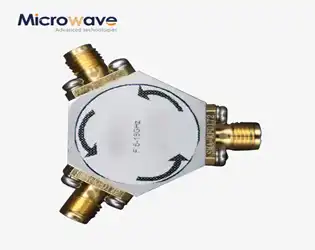
Broadband RF Circulator: Key Specifications Explained
August 18, 2026
When sourcing RF components for mission-critical communication systems, understanding the performance parameters of a broadband RF circulator becomes essential. This non-reciprocal passive device enables unidirectional signal flow across wide frequency ranges—often spanning multiple octaves—while isolating reflections that could damage sensitive transmitters or degrade receiver sensitivity. Unlike narrowband designs optimized for single frequencies, broadband circulators utilize advanced ferrite materials and magnetic biasing architectures to maintain consistent insertion loss and isolation across expansive bandwidths. This capability makes them indispensable in applications where frequency agility and system simplification are paramount, from electronic warfare platforms to wideband radar installations.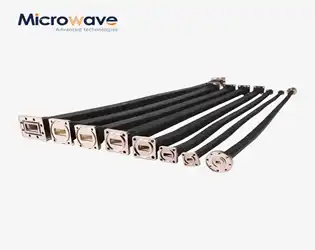
How Do Twistable Waveguides Improve Optical Performance?
August 18, 2026
Twistable waveguides enhance optical and microwave system performance by enabling polarization rotation while preserving signal integrity. Unlike rigid components, these devices achieve 90° or 180° electromagnetic wave polarization adjustments through precision-engineered internal structures that maintain ultra-low insertion loss (< 0.1 dB). Advanced designs incorporate gradient waveguide geometries and contactless rotation mechanisms, preventing mechanical wear while supporting high-power transmission from 1kW to 50kW across 2.2GHz to 110GHz frequency bands. This combination of mechanical adaptability and electrical precision solves critical alignment challenges in phased array radars, satellite ground stations, and medical MRI systems where rigid waveguide routing proves impractical.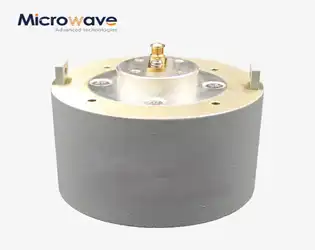
Planar Spiral Antenna Design: Key Principles and Best Practices
August 18, 2026
Designing effective spiral antenna systems requires balancing broadband performance with physical compactness while maintaining circular polarization purity. At Advanced Microwave Technologies Co., Ltd., our Planar Spiral Antenna solutions address the stringent demands of aerospace, defense, and satellite communication applications where ultra-wideband (UWB) coverage spanning 1 GHz to 40 GHz is essential. This guide explores the fundamental design principles, comparative advantages, procurement considerations, and integration best practices that enable engineers and purchasing managers to specify and deploy these frequency-independent apertures with confidence.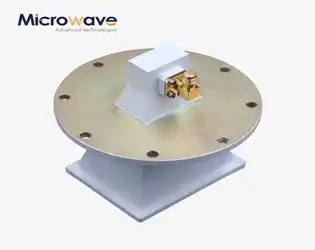
Pyramidal Horn Antenna Design: A Practical Guide
August 17, 2026
Pyramidal horn antenna design represents a critical engineering discipline for professionals working in microwave and RF systems. This practical guide addresses the essential principles behind designing these antennas, focusing on flare geometry, aperture calculations, and impedance matching strategies. Whether you're optimizing for satellite ground stations, radar feeds, or EMC testing applications, understanding the relationship between physical dimensions and electromagnetic performance ensures your antenna delivers predictable gain, controlled beam patterns, and minimal signal reflection across your target frequency range.