





BLOG
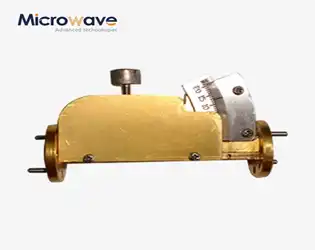
Why Use a Waveguide Variable Attenuator?
November 19, 2025
In high-frequency microwave systems where signal integrity is paramount, engineers face a critical challenge: how to precisely control signal amplitude without introducing distortion, phase shifts, or excessive losses. When your satellite communication system demands exact power levels to prevent transponder overload, when your radar installation requires fine-tuned signal strength for optimal target detection, or when your laboratory testing setup needs repeatable attenuation adjustments across multiple frequency bands, the solution lies in implementing a Waveguide Variable Attenuator. These sophisticated components provide the dynamic control necessary to optimize system performance, protect sensitive equipment from power surges, and enable accurate measurements in demanding applications where fixed attenuation simply cannot deliver the flexibility required for mission-critical operations.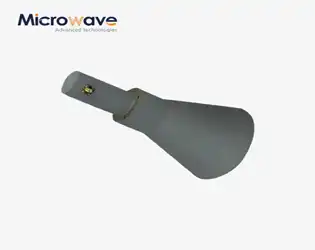
November 18, 2025
In today's mission-critical satellite communications, radar surveillance, and aerospace applications, signal degradation due to polarization mismatch can cost organizations thousands in downtime and compromised data integrity. The Ladder Membrane Conical Dual Circular Polarization Horn Antenna addresses this challenge head-on by delivering exceptional dual circular polarization performance that ensures reliable signal reception regardless of environmental complexity. Whether you're upgrading ground station infrastructure or deploying advanced defense surveillance systems, understanding these five critical advantages will help you make an informed procurement decision that maximizes both performance and return on investment.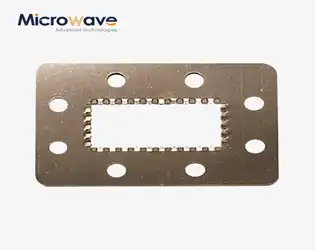
Waveguide Gaskets: Types, Features & Selection
November 18, 2025
In high-frequency microwave systems, signal leakage at waveguide joints can devastate system performance, causing costly failures in satellite communications, radar operations, and aerospace applications. The Waveguide Anti-leak Gasket emerges as the critical solution, preventing electromagnetic interference and maintaining signal integrity where precision matters most. This comprehensive guide explores gasket types, essential features, material selection criteria, and practical considerations to help engineers and procurement specialists make informed decisions for their waveguide assemblies.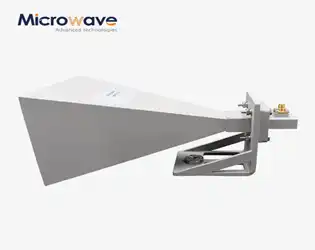
From Prototype to Production: Why Standard Horn Antenna Matters in R&D
November 18, 2025
In research and development environments, engineers face a persistent challenge: how to validate electromagnetic designs efficiently without compromising accuracy or wasting valuable time on unreliable testing equipment. The Standard Horn Antenna emerges as the critical solution that bridges the gap between theoretical concepts and production-ready systems. When prototype testing fails due to inadequate reference standards or inconsistent measurement tools, entire project timelines collapse, budgets overrun, and innovation stalls. This article reveals why the Standard Horn Antenna has become an indispensable asset in R&D laboratories worldwide, demonstrating how its precision, reliability, and versatility transform the development cycle from uncertain experimentation to confident production deployment.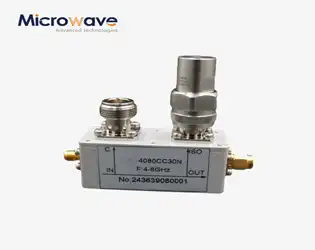
Inside a Directional coupler & explanation of how they work
November 17, 2025
Have you ever struggled with signal monitoring in high-frequency systems where power measurements become unreliable, causing system failures or inaccurate data transmission? Understanding what's happening inside a Coaxial Directional Coupler and how these precision devices work is essential for engineers and technicians who need to maintain signal integrity across communication networks, radar installations, and satellite systems without disrupting the main signal path.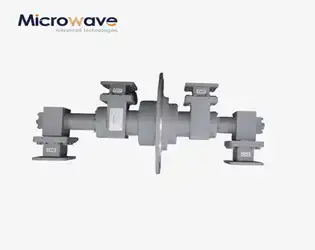
What Makes a High-Performance Dual Channel Coaxial Rotary Joint?
November 17, 2025
In today's demanding satellite communication and defense applications, signal degradation during rotation can cost millions in downtime and compromise mission-critical operations. Engineers face a persistent challenge: how to maintain uninterrupted, high-fidelity signal transmission while components rotate at high speeds in extreme environments. A high-performance Dual Channel Coaxial Rotary Joint solves this critical problem by enabling seamless signal flow between rotating and stationary systems with minimal insertion loss, ensuring your radar, satellite ground station, or aerospace navigation system operates flawlessly when precision matters most.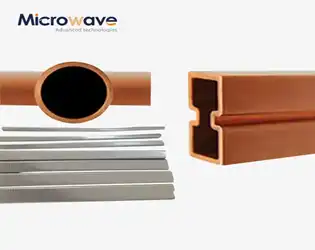
November 17, 2025
When your satellite communication system experiences severe signal degradation at high frequencies, or your radar installation suffers from excessive power loss over long distances, the culprit often lies in choosing the wrong transmission technology. A Waveguide Tube is a hollow metallic pipe designed to guide electromagnetic waves at microwave and millimeter-wave frequencies with minimal loss, fundamentally different from coaxial cables that use a central conductor surrounded by insulation and shielding to transmit signals through current flow.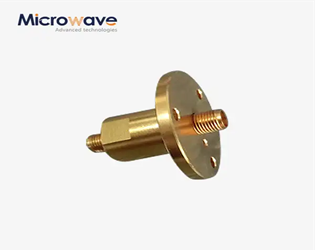
Step Ahead of Competitors: Single Channel Coaxial Rotary Joint for Cutting-Edge Systems
November 13, 2025
In today's rapidly evolving technological landscape, engineers face a critical challenge: maintaining uninterrupted signal integrity in rotating systems while minimizing transmission losses. Whether you're developing advanced radar platforms, satellite ground stations, or aerospace defense systems, signal degradation during rotation can compromise your entire operation. The Single Channel Coaxial Rotary Joint addresses this pain point head-on, delivering seamless RF signal transmission in the most demanding rotating applications. This precision-engineered component ensures your cutting-edge systems maintain peak performance where competitors' solutions fall short, providing the reliability that modern telecommunications, defense, and aerospace industries demand.