





BLOG

High Power Directional Couplers For Coaxial RF
December 1, 2025
When critical RF systems fail due to signal monitoring issues, power overload, or impedance mismatches, operations come to a standstill and costly downtime follows. High Power Directional Couplers For Coaxial RF provide the essential solution for real-time power monitoring, signal sampling, and transmission line protection in demanding applications. These precision-engineered Coaxial Directional Coupler devices enable engineers to safely monitor forward and reflected power in high-power RF systems without disrupting signal flow, ensuring system reliability across satellite communications, radar installations, and telecommunications infrastructure.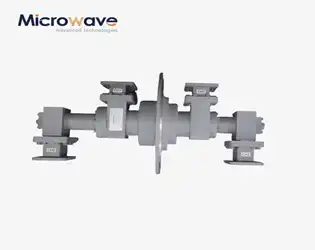
Seamless Rotation, Uninterrupted Signal: The Dual Channel Coaxial Rotary Joint Advantage
December 1, 2025
In rotating radar systems, satellite ground stations, and aerospace navigation equipment, engineers face a critical challenge: how to maintain flawless signal transmission while components rotate at high speeds. Signal degradation, insertion loss, and intermittent connectivity can compromise mission-critical operations, leading to data loss, positioning errors, or complete system failure. The Dual Channel Coaxial Rotary Joint addresses this pain point by providing uninterrupted, low-loss signal transfer in rotating 50-ohm systems, ensuring that your communication and detection systems perform reliably even under the most demanding conditions.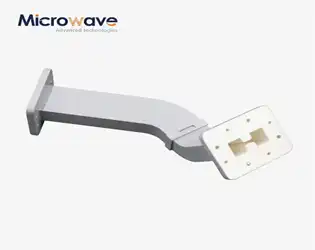
What Are the Common Types of Double Ridge Waveguides?
November 28, 2025
When designing microwave and RF systems that demand exceptional broadband performance, engineers often encounter a critical challenge: finding waveguide solutions that can handle ultra-wide frequency ranges without compromising signal integrity. Traditional rectangular waveguides fall short in applications requiring 3:1 or 4:1 bandwidth ratios, leaving system designers struggling with multiple waveguide transitions and increased insertion loss. Double Ridge Waveguide technology emerges as the definitive solution to this bandwidth limitation problem, offering unprecedented frequency coverage in a single waveguide structure. Understanding the common types of Double Ridge Waveguide configurations becomes essential for engineers working in satellite communications, defense radar systems, and high-frequency test equipment where broadband capability directly impacts system performance and cost-effectiveness.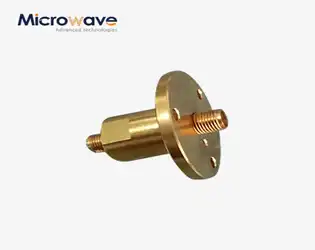
Unlocking Performance: Single Channel Coaxial Rotary Joint for Aerospace & Maritime
November 28, 2025
Picture this: a military radar system scanning the skies at high speed, or a maritime satellite terminal tracking signals while the vessel pitches through rough seas. In both scenarios, one critical challenge emerges—maintaining flawless RF signal transmission across rotating interfaces without degradation, loss, or interruption. This is precisely where the Single Channel Coaxial Rotary Joint becomes indispensable. Designed to deliver uninterrupted, low-loss signal transfer in demanding aerospace and maritime environments, this precision-engineered component ensures that rotating systems maintain peak performance even under the most challenging operational conditions. Whether you're designing next-generation radar platforms, satellite communication terminals, or defense surveillance systems, understanding how Single Channel Coaxial Rotary Joints unlock superior performance can transform your approach to system reliability and signal integrity.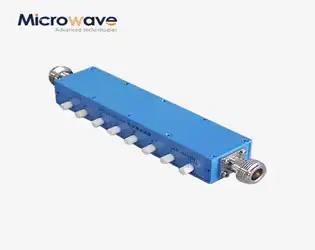
What Is a Coaxial Variable Attenuator and Why Is It Important?
November 28, 2025
In modern RF and microwave systems, engineers frequently encounter a critical challenge: signal levels that are too strong can overload receivers, distort measurements, and damage sensitive equipment, while insufficient control over signal strength compromises system performance and testing accuracy. A Coaxial Variable Attenuator is a precision electronic device that reduces RF signal power without distorting the waveform, providing adjustable attenuation control essential for telecommunications, aerospace, defense, and testing applications where precise signal management determines system success or failure.
November 26, 2025
When your satellite ground station loses signal strength mid-transmission, or your radar system experiences unexpected power fluctuations during critical operations, the choice between AC and DC power becomes more than just a technical specification—it becomes a mission-critical decision. Whether you're managing telecommunications infrastructure, aerospace defense systems, or advanced microwave applications, understanding which power source delivers optimal performance for your AC Power Amplifier can mean the difference between seamless operation and costly system failures.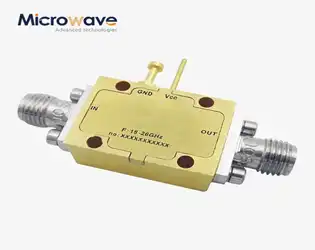
What is the principle of phase shifter?
November 26, 2025
Imagine your satellite communication system failing to lock onto signals during critical operations, or your radar system unable to accurately track multiple targets simultaneously. These scenarios highlight a fundamental challenge in RF engineering: maintaining precise phase control across complex microwave systems. A phase shifter operates by introducing a controlled time delay or phase difference to an incoming electromagnetic signal without significantly altering its amplitude, enabling critical applications from phased array antennas to advanced beamforming systems. At the heart of modern phase control technology lies the Voltage Controlled Phase Shifter, a device that translates voltage variations into precise phase adjustments, making it indispensable for satellite communications, aerospace navigation, defense radar systems, and next-generation wireless networks where signal integrity and directional control determine system performance.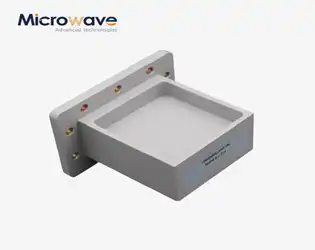
Custom Waveguide to Coax Adapters | Get Multiple Quotes
November 26, 2025
When your microwave system experiences signal degradation, impedance mismatches, or installation delays due to incompatible waveguide-to-coaxial transitions, you face more than just technical challenges—you risk project timelines, budget overruns, and system performance failures. Finding the right Custom Waveguide to Coaxial Adapter that meets your exact specifications across frequency bands, power handling, and environmental requirements demands precision engineering and trusted manufacturing partners. This comprehensive guide addresses these critical pain points by exploring how custom solutions deliver seamless signal transitions, helping you navigate specifications, applications, and supplier selection to ensure your RF system operates at peak performance without compromise.