





BLOG
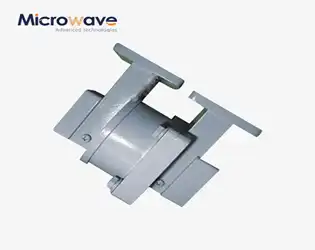
How Does RF Contact & Choke Design Influence Waveguide Single Channel Rotary Joint Performance?
December 5, 2025
When radar systems fail during critical operations or satellite communications experience signal degradation mid-transmission, the culprit often lies in poorly designed RF contacts and choke structures within the Waveguide Single Channel Rotary Joint. These precision-engineered components serve as the critical bridge between stationary and rotating waveguide sections, and their design directly determines whether your system maintains signal integrity or suffers from devastating power losses, electromagnetic leakage, and premature component failure. Understanding the intricate relationship between RF contact mechanisms and choke designs is essential for engineers seeking to optimize performance in satellite communications, defense radar systems, aerospace applications, and navigation equipment where reliability is non-negotiable.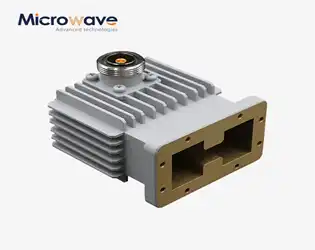
Why Choose a High Power Waveguide to Coaxial Adapter?
December 4, 2025
In high-frequency RF systems, signal degradation and power loss can cripple your entire operation. Picture this: your satellite ground station suddenly experiences a 4dB drop in received signal strength, or your radar system fails to detect critical targets because of excessive transmission loss. These scenarios are not hypothetical—they happen when system designers underestimate the importance of proper signal conversion. A High Power Waveguide to Coaxial Adapter solves this critical challenge by providing a reliable, efficient interface between waveguide systems and coaxial transmission lines, ensuring minimal signal loss while handling substantial power levels in demanding applications.
Benefits of a Log Periodic Antenna for Field Strength Measurement
December 4, 2025
Field engineers and RF specialists face a persistent challenge: achieving accurate electromagnetic field measurements across multiple frequency bands without constantly switching equipment. Traditional antennas force you to compromise between bandwidth and precision, leading to measurement gaps, equipment overload, and unreliable data. The Log Periodic Antenna solves this problem by delivering consistent performance across ultra-wide frequency ranges, making it the gold standard for field strength measurement in telecommunications, compliance testing, and electromagnetic compatibility applications.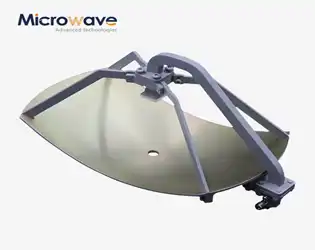
Parabolic Antenna Performance: Gain, Efficiency, and Loss
December 4, 2025
When satellite signals fade during critical operations or radar systems fail to detect distant targets accurately, the culprit often lies in poorly optimized parabolic antenna performance. Engineers across telecommunications, aerospace, and defense sectors face daily challenges balancing gain maximization, efficiency optimization, and loss minimization in their antenna systems. Understanding how these three interconnected parameters affect your Parabolic Antenna's real-world performance can mean the difference between mission success and costly communication failures. This comprehensive guide demystifies parabolic antenna performance metrics, revealing proven strategies to extract maximum capability from your antenna infrastructure while addressing the technical challenges that compromise signal integrity in demanding applications.
What is a phase shifter in an antenna?
December 3, 2025
Imagine your radar system failing to detect an incoming threat because the antenna beam couldn't adjust fast enough, or your satellite communication dropping during critical data transmission due to misaligned signal phases. These scenarios highlight the critical importance of phase control in modern antenna systems. A phase shifter in an antenna is a specialized microwave component that adjusts the phase angle of radio frequency signals while maintaining their amplitude, enabling precise control over beam direction and signal alignment. Among various types, the Voltage Controlled Phase Shifter stands out as an essential solution for applications requiring dynamic phase adjustment, from military radar systems to next-generation 5G networks and satellite communications.
December 3, 2025
When engineers struggle with signal distortion in critical satellite communication systems or radar installations fail to meet performance specifications, one fundamental question often surfaces: is the power amplifier output AC or DC? Understanding this distinction becomes crucial when system reliability depends on precise signal amplification without degradation. At Advanced Microwave Technologies Co., Ltd., our AC Power Amplifier solutions eliminate this confusion by delivering clean, amplified signals that maintain signal integrity across demanding applications from 0.5 to 110 GHz frequency ranges.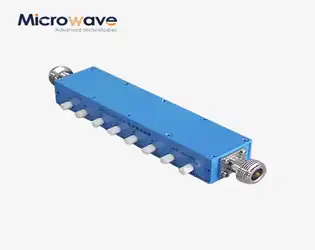
what does a coax attenuator do?
December 3, 2025
Have you ever faced equipment damage from signal overload, distorted measurements, or unstable system performance in your RF testing environment? A Coaxial Variable Attenuator precisely reduces signal strength without waveform distortion, ensuring optimal power levels for telecommunications, aerospace, defense, and satellite communication applications where signal integrity determines mission success.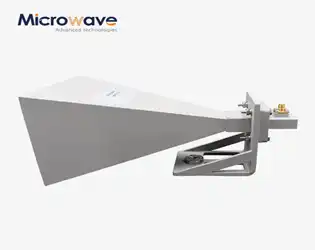
What Are Standard Horn Antennas & Accessories Used For?
December 1, 2025
When precision signal transmission fails in critical applications—from satellite ground stations losing connection during crucial data transfers to radar systems unable to detect targets in adverse weather—the culprit often lies in inadequate antenna performance. Standard Horn Antenna technology addresses these pain points by delivering reliable, high-gain microwave solutions for testing, measurement, sensing, radar, and communication systems where accuracy cannot be compromised.