





BLOG
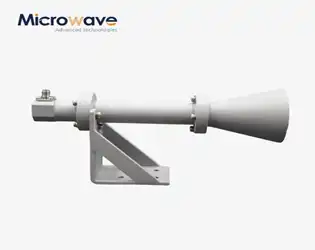
Dual Linear Broadband Dual Circular Polarization Horn Antenna Design Insights
January 14, 2026
In today's demanding communication environment, satellite ground stations and defense radar systems face a critical challenge: signal degradation caused by polarization mismatch and atmospheric disturbances. The Dual Linear Broadband Dual Circular Polarization Horn Antenna addresses this pain point by providing exceptional signal integrity across both linear and circular polarization modes, ensuring reliable data transmission regardless of atmospheric conditions or orientation changes between transmitting and receiving ends. This comprehensive guide reveals the design principles, performance characteristics, and practical applications that make the Dual Linear Broadband Dual Circular Polarization Horn Antenna an essential component for modern aerospace, defense, and satellite communication systems.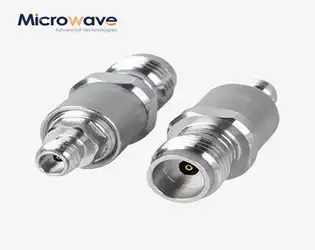
Can a Coaxial Cable Adapter Support High‑Frequency RF Signals?
January 14, 2026
In today's demanding RF and microwave applications, engineers and technical professionals often face a critical challenge: ensuring seamless signal transmission across systems with different connector types while maintaining signal integrity at high frequencies. When your satellite ground station requires connecting SMA interfaces to N-type equipment, or your aerospace radar system needs to bridge different impedance standards, the question becomes urgent: Can a Coaxial Cable Adapter truly support high-frequency RF signals without compromising performance? The answer is definitively yes—when properly designed and manufactured to exacting standards. High-quality Coaxial Cable Adapter solutions from Advanced Microwave Technologies Co., Ltd. support frequencies from DC to 40 GHz while maintaining exceptional signal integrity, making them indispensable for satellite communications, defense systems, aerospace applications, and telecommunications infrastructure where reliability cannot be compromised.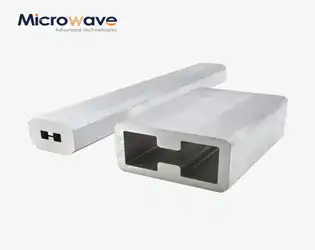
Double Ridge Waveguide Tube Features You Cannot Ignore
January 14, 2026
When high-frequency signal transmission fails due to narrow bandwidth limitations, costly system downtime and performance degradation quickly follow. Engineers working with radar systems, satellite communications, and defense applications face a persistent challenge: conventional rectangular waveguides simply cannot accommodate the wide frequency ranges demanded by modern technologies. The Double Ridge Waveguide Tube emerges as the solution, offering bandwidth ratios of 3:1 or greater while maintaining exceptional signal integrity across frequencies from 1 GHz to 110 GHz. This article reveals the critical features that make Double Ridge Waveguide Tube technology indispensable for systems requiring multi-frequency support, low signal loss, and reliable performance under demanding operational conditions.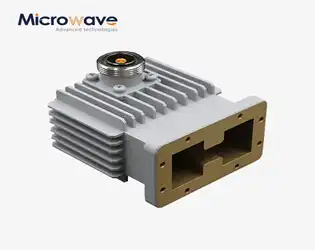
Best Practices for High Power Waveguide to Coaxial Adapter Cooling
January 13, 2026
In high-power microwave systems, thermal failure remains the silent killer of signal integrity and equipment longevity. When a High Power Waveguide to Coaxial Adapter operates beyond safe thermal limits, engineers face catastrophic scenarios including dielectric breakdown in under ten seconds, impedance shifts that destroy VSWR performance, and softened solder joints that compromise critical connections. For systems handling 500W to 5kW of continuous power in satellite ground stations, radar installations, and defense communications, implementing proper cooling strategies is not optional—it is the difference between reliable operation and costly system failures that can ground missions and disrupt critical communications infrastructure.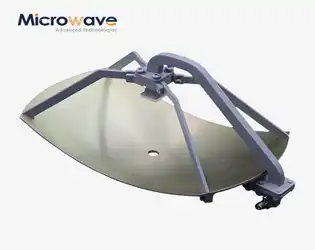
Parabolic Antenna Components: Reflector, Feed, and Support
January 13, 2026
When your satellite communication suddenly experiences significant signal degradation during critical operations, or your radar system fails to detect distant targets accurately, the problem often traces back to poorly designed or mismatched parabolic antenna components. Understanding the three fundamental elements—reflector, feed, and support structures—is essential for anyone working in telecommunications, defense, aerospace, or satellite communications. This comprehensive guide explores how these components work together to deliver the high-gain, directional performance that modern microwave applications demand, helping engineers and procurement specialists make informed decisions that prevent costly system failures and ensure mission-critical reliability.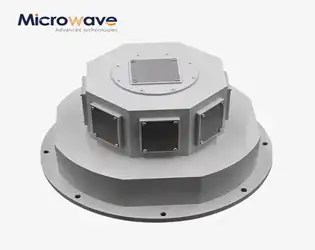
How Does Slotted Waveguide Array Antenna Improve Signal Gain?
January 13, 2026
In satellite communication networks, radar tracking systems, and aerospace navigation platforms, signal degradation over long distances remains a critical challenge that directly impacts system reliability and performance. When conventional antenna systems fail to maintain adequate signal strength across extended transmission paths, mission-critical operations face compromised accuracy, reduced coverage areas, and increased error rates. The Slotted Waveguide Array Antenna addresses this fundamental issue by implementing precisely engineered slot configurations that work together to concentrate electromagnetic energy into highly directional radiation patterns, achieving gains up to 40 dB while maintaining exceptional signal integrity across frequencies ranging from 2 GHz to 110 GHz. This advanced antenna technology transforms how modern communication and detection systems overcome distance limitations through intelligent array design and optimized waveguide structures.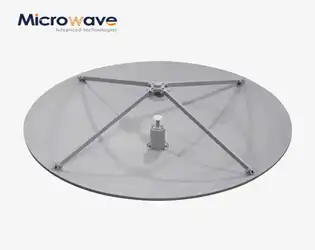
Cassegrain Antenna Features You Must Know in 2026
January 9, 2026
Are your satellite communication systems struggling with signal degradation and excessive feeder losses? In 2026, precision antenna technology has become critical for defense contractors, telecommunications providers, and aerospace organizations facing demanding long-range communication requirements. The Cassegrain Antenna represents a breakthrough solution that addresses these challenges through its innovative dual-reflector architecture. This comprehensive guide explores the essential Cassegrain Antenna features that define performance excellence in modern high-frequency applications, from satellite ground stations to advanced radar systems requiring superior beam control and minimal transmission loss.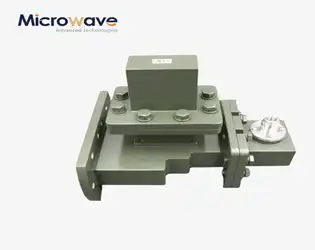
How Does an E-Plane Tee Work in Waveguide Networks?
January 9, 2026
In microwave engineering, signal distribution demands precision engineering components that ensure minimal signal loss and consistent performance across high-frequency operations. Picture this scenario: your satellite ground station requires simultaneous signal routing to multiple antenna elements while maintaining exact phase relationships and impedance matching throughout the entire system. This is precisely where the e-plane tee becomes indispensable. An e-plane tee is a three-port waveguide junction where the auxiliary arm is attached to the broad wall of the main rectangular waveguide, positioned parallel to the electric field lines. This configuration enables the component to efficiently split or combine electromagnetic signals with controlled phase relationships, making it essential for applications ranging from radar systems to satellite communications where power division accuracy directly impacts system performance and signal integrity.