





BLOG
What Design Features Enable the Miniaturization of the Wideband Double-Ridged Horn Antenna?
April 7, 2025
In the ever-evolving landscape of microwave technology, antenna miniaturization remains a critical engineering challenge, particularly for wideband applications. The Mini Wideband Double-ridged Horn Antenna represents a significant advancement in this field, combining compact dimensions with exceptional performance across broad frequency ranges. This sophisticated antenna design utilizes several key miniaturization techniques, including optimized ridge geometry, advanced impedance matching structures, and precision-engineered flare angles. By implementing these design innovations, Advanced Microwave Technologies has successfully developed a compact yet powerful antenna solution that delivers high gain and low VSWR across frequencies from 1.5 GHz to 18 GHz, without sacrificing performance or reliability. The resulting miniaturized form factor makes these antennas ideal for space-constrained applications in EMI/RFI testing, EMC measurement, and various communication systems.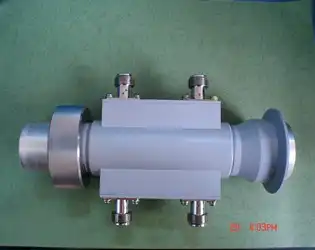
Can a Coaxial Directional Coupler be used in both high-frequency and low-frequency systems?
April 7, 2025
Coaxial Directional Couplers represent a critical component in radio frequency (RF) and microwave engineering, designed to sample signals with minimal disruption to the main transmission path. A common question among engineers and system designers is whether these devices can effectively function across both high-frequency and low-frequency systems. The answer is yes, but with important considerations. Coaxial Directional Couplers from Advanced Microwave Technologies can indeed operate across an impressive frequency spectrum from DC to 110 GHz, making them versatile components for numerous applications. However, their performance characteristics, coupling efficiency, and directivity can vary significantly between frequency ranges. Understanding these variations is essential for selecting the right coupler for specific applications, whether they involve low-frequency communications or high-frequency radar systems..webp)
April 7, 2025
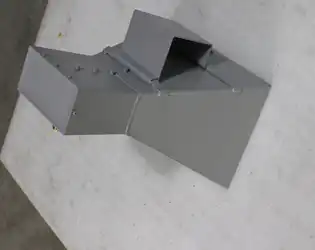
The E-Plane Tee represents a fundamental three-port waveguide junction with a distinctive T-shaped structure where the auxiliary arm emerges from the broad wall (E-plane) of the main waveguide. This configuration creates a junction that lies parallel to the electric field lines of the dominant mode in rectangular waveguides. Unlike other waveguide junctions such as H-Plane Tees (where the auxiliary arm extends from the narrow wall) or Magic Tees (hybrid combinations), the E-Plane Tee directs electromagnetic energy through a unique power-splitting mechanism where the electric fields align along the same plane, allowing for precise signal distribution with minimal reflections. This fundamental structure makes E-Plane Tees particularly valuable in microwave systems requiring controlled power division, phase relationships, and impedance matching across high-frequency applications ranging from telecommunications to aerospace systems.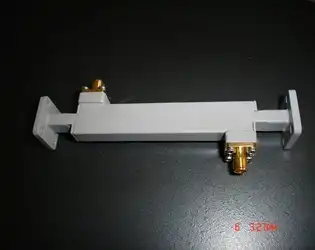
What is the basic principle behind the operation of a broadwall directional coupler?
April 7, 2025
A Broadwall Directional Coupler operates on the fundamental principle of electromagnetic coupling between two adjacent waveguides through precisely designed coupling apertures in their common broadwall. When a microwave signal travels through the primary waveguide, a small, predictable portion of this energy is transferred to the secondary waveguide through these apertures. The coupling mechanism relies on the specific positioning, size, and distribution of these holes, typically following a Tchebyscheff distribution pattern to achieve optimal electrical characteristics. This configuration allows the coupler to sample power in one direction while providing significant isolation in the reverse direction, making it invaluable for signal monitoring, power measurement, and circuit protection in high-frequency applications ranging from telecommunications to aerospace systems.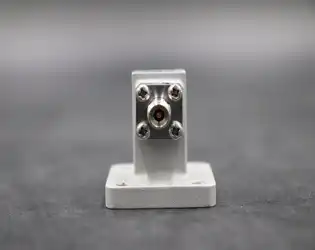
What are the different types of WG adapters available in the market?
April 7, 2025
Waveguide (WG) adapters are essential components in microwave communication systems, providing crucial connectivity between different transmission line technologies. These precision-engineered devices enable the seamless transition of electromagnetic signals between waveguides and other transmission components such as coaxial cables or microstrip lines. The market offers numerous types of WG adapters, each designed to meet specific frequency ranges, power requirements, and installation configurations. Advanced Microwave Technologies Co., Ltd., with over 20 years of expertise in microwave products, manufactures a comprehensive range of WG adapters catering to various industry needs, from radar systems to satellite communications and beyond..webp)
What are the key factors affecting the power handling capacity of a coaxial variable attenuator?
April 3, 2025
The power handling capacity of a coaxial variable attenuator is a critical specification that determines its performance and reliability in various RF and microwave applications. This comprehensive analysis explores the key factors that influence the power handling capability of these essential components. Understanding these factors is crucial for engineers and technicians working with high-frequency systems, as proper power handling ensures optimal performance and prevents device damage. The discussion encompasses material properties, design considerations, and operational parameters that collectively determine how much power a coaxial variable attenuator can safely manage.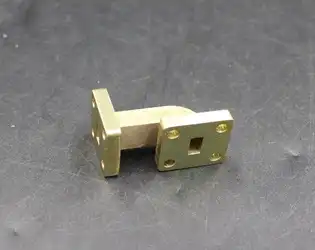
What is the typical size and shape of a waveguide E bend?
April 3, 2025
Understanding the typical size and shape of waveguide E bends is crucial for microwave and RF engineering applications. A waveguide E bend is a specialized component designed to change the direction of electromagnetic wave propagation in the E-plane (electric field plane). These precision-engineered components typically feature a 90-degree bend, though other angles are available, and their dimensions are standardized according to waveguide sizes ranging from WR10 to WR430. The size and shape are carefully optimized to maintain signal integrity while minimizing losses and reflections during the direction change.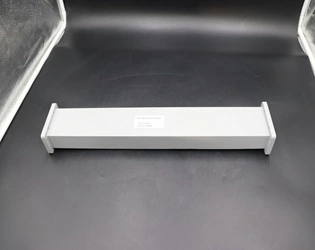
What are the advantages of using Rectangular Straight Waveguides?
April 3, 2025
Rectangular Straight Waveguides represent a fundamental component in modern microwave and radio frequency (RF) systems, offering unparalleled advantages in signal transmission and power handling capabilities. These crucial transmission lines serve as the backbone of numerous applications in satellite communications, radar systems, and telecommunications infrastructure. Understanding the advantages of Rectangular Straight Waveguides is essential for engineers and technical professionals seeking optimal solutions for high-frequency signal transmission, as these components provide superior performance characteristics that make them indispensable in many advanced applications.