





3 Features That Make Our End Launch Waveguide to Coaxial Adapter More Reliable
Are you tired of signal degradation and connection failures in your critical RF systems? When designing high-frequency applications for satellite communications, defense radar, or aerospace systems, unreliable signal transitions can cost you performance, time, and money. The End Launch Waveguide to Coaxial Adapter serves as the crucial bridge between waveguide and coaxial transmission lines, and its reliability directly impacts your entire system's performance. In this comprehensive guide, we explore three fundamental features that make our End Launch Waveguide to Coaxial Adapter more reliable than conventional alternatives, ensuring consistent signal integrity and long-term operational excellence in demanding environments.
Superior Impedance Matching Technology for Optimal Signal Transfer
Advanced Probe Design and Positioning
The heart of any reliable End Launch Waveguide to Coaxial Adapter lies in its impedance matching capabilities. Our advanced design incorporates precisely engineered probe dimensions and positioning that ensure seamless transition from waveguide to coaxial transmission modes. The impedance matching network is carefully calculated to minimize reflections and maximize power transfer across the entire frequency range. This sophisticated approach eliminates the common problem of signal loss that occurs when impedance mismatches create standing waves within the transmission system. The probe geometry is optimized through extensive electromagnetic simulation and validated in our 24m Microwave Darkroom facility, which provides unparalleled accuracy in far-field measurements. Our engineers utilize advanced modeling techniques to ensure that the End Launch Waveguide to Coaxial Adapter maintains consistent impedance characteristics even under varying temperature conditions and mechanical stress. This level of precision engineering results in VSWR values that consistently outperform industry standards.

Frequency-Optimized Matching Structures
Our End Launch Waveguide to Coaxial Adapter features frequency-optimized matching structures that adapt to the specific requirements of different waveguide bands. From legacy communication systems operating at lower frequencies to cutting-edge 5G and future 6G technologies requiring high-frequency compatibility up to 110 GHz, our matching network ensures reliable performance across this vast spectrum. The internal geometries are designed with rounded edges and smooth transitions that minimize discontinuities and reduce unwanted reflections. The matching structures incorporate multiple stages of impedance transformation, allowing for gradual transition from the waveguide impedance to the characteristic impedance of the coaxial line. This multi-stage approach significantly improves the adapter's broadband performance and reduces insertion loss across the operational frequency range. Every End Launch Waveguide to Coaxial Adapter undergoes rigorous testing in our ISO 9001:2015 certified facilities to ensure it meets the stringent performance requirements of satellite communications, aerospace, and defense applications.
Enhanced Mechanical Durability and Environmental Resistance
Robust Construction Materials and Design Philosophy
The mechanical integrity of an End Launch Waveguide to Coaxial Adapter directly impacts its long-term reliability in harsh operating environments. Our adapters are constructed using premium materials selected for their exceptional mechanical properties, corrosion resistance, and thermal stability. The housing is machined from high-grade aluminum alloy or stainless steel, depending on the application requirements, providing superior structural integrity while maintaining lightweight characteristics essential for aerospace applications. The mechanical design incorporates stress distribution features that prevent failure points commonly found in conventional adapters. All critical joints and interfaces are engineered to withstand mechanical shock, vibration, and thermal cycling without compromising electrical performance. The End Launch Waveguide to Coaxial Adapter features reinforced connection points that maintain secure mechanical coupling even after thousands of connect-disconnect cycles, ensuring reliable operation in field-serviceable applications.
Environmental Protection and Sealing Systems
Environmental factors pose significant challenges to the reliability of microwave components, particularly in outdoor installations and mobile applications. Our End Launch Waveguide to Coaxial Adapter incorporates advanced sealing systems that provide protection against moisture ingress, dust contamination, and corrosive atmospheric conditions. The sealed design meets or exceeds IP65 protection standards, making it suitable for deployment in marine environments, weather monitoring systems, and outdoor telecommunications infrastructure. Many models feature pressurization ports that allow for dry air or inert gas pressurization, significantly increasing voltage breakdown thresholds and peak power handling capabilities. This pressurization capability is particularly valuable in high-power radar applications and satellite ground stations where power levels can exceed conventional limits. The environmental protection systems are designed to maintain their integrity throughout the adapter's operational life, ensuring consistent performance regardless of deployment conditions.
Low Insertion Loss and Excellent VSWR Performance
Optimized Transmission Characteristics
The electrical performance of an End Launch Waveguide to Coaxial Adapter is fundamentally determined by its insertion loss and VSWR characteristics. Our adapters achieve exceptionally low insertion loss through careful optimization of the internal geometry and surface finish quality. The transition region between waveguide and coaxial modes is engineered to minimize mode conversion losses and unwanted coupling to higher-order modes that can degrade system performance. The internal surfaces feature precision machining and specialized plating processes that reduce ohmic losses while providing long-term corrosion protection. Surface roughness is controlled to minimize current distribution disruption at high frequencies, ensuring that the End Launch Waveguide to Coaxial Adapter maintains low loss characteristics even at millimeter-wave frequencies. This attention to detail results in insertion loss values that are typically 0.1 to 0.2 dB lower than comparable products in the market.

Exceptional VSWR Performance Across Operating Bandwidth
Voltage Standing Wave Ratio (VSWR) is a critical parameter that determines how effectively an End Launch Waveguide to Coaxial Adapter transfers power without creating reflections that can damage transmitter equipment or degrade receiver sensitivity. Our adapters consistently achieve VSWR performance better than 1.25:1 across the specified operating bandwidth, with many models achieving values as low as 1.15:1 in optimized frequency ranges. The exceptional VSWR performance is achieved through the implementation of multiple matching sections and careful control of discontinuities at all interfaces. Computer-aided design tools are employed to optimize the transition geometry, while extensive prototype testing validates the performance predictions. Each End Launch Waveguide to Coaxial Adapter undergoes comprehensive electrical testing using advanced vector network analyzers to ensure it meets or exceeds the specified VSWR requirements. This rigorous quality control process guarantees that customers receive adapters with predictable and reliable electrical characteristics. The combination of low insertion loss and excellent VSWR performance makes our End Launch Waveguide to Coaxial Adapter particularly suitable for sensitive applications such as radio astronomy, precision measurement systems, and high-performance communication links where signal integrity is paramount. The adapters maintain their electrical performance characteristics throughout their operational life, providing the long-term reliability essential for mission-critical applications.
Conclusion
The three key features that make our End Launch Waveguide to Coaxial Adapter more reliable—superior impedance matching technology, enhanced mechanical durability, and excellent electrical performance—work synergistically to deliver unmatched reliability in demanding applications. These engineering innovations ensure consistent performance across wide frequency ranges while providing the mechanical robustness necessary for long-term operation in harsh environments.
Cooperate with Advanced Microwave Technologies Co., Ltd.
As a China End Launch Waveguide to Coaxial Adapter factory with over 20 years of experience, Advanced Microwave Technologies Co., Ltd. stands as your trusted China End Launch Waveguide to Coaxial Adapter supplier and manufacturer. Our state-of-the-art 24m Microwave Darkroom and ISO certified facilities ensure High Quality End Launch Waveguide to Coaxial Adapter production. Whether you need standard models or customized solutions, we offer competitive End Launch Waveguide to Coaxial Adapter price as a leading China End Launch Waveguide to Coaxial Adapter wholesale provider. Our End Launch Waveguide to Coaxial Adapter for sale includes comprehensive technical support and rapid prototyping services. Contact us at craig@admicrowave.com to discuss your requirements and discover why engineers worldwide choose our reliable solutions for their critical applications.
FAQ
Q: What frequency range do your End Launch Waveguide to Coaxial Adapters support?
A: Our adapters support frequencies from 0.5 GHz to 110 GHz, covering all standard waveguide bands for diverse applications.
Q: How do you ensure the reliability of your End Launch Waveguide to Coaxial Adapters?
A: We employ rigorous testing in our 24m Microwave Darkroom, use premium materials, and maintain ISO 9001:2015 certification for quality assurance.
Q: Can you provide customized End Launch Waveguide to Coaxial Adapter solutions?
A: Yes, we offer comprehensive OEM services including custom frequency ranges, flange types, and connector configurations to meet specific requirements.
Q: What is the typical VSWR performance of your adapters?
A: Our adapters typically achieve VSWR better than 1.25:1 across the operating bandwidth, with many models reaching 1.15:1 in optimized ranges.
References
1. "Microwave Engineering" by David M. Pozar, Fourth Edition, focusing on waveguide-to-coaxial transitions and impedance matching techniques.
2. "RF and Microwave Passive and Active Technologies" by Mike Golio and Janet Golio, covering adapter design principles and performance optimization.
3. "Waveguide Components for Antenna Feed Systems: Theory and CAD" by Jarmo Ala-Laurinaho and Antti V. Räisänen, addressing mechanical and electrical design considerations.
4. "Handbook of Microwave Component Measurements" by Joel P. Dunsmore, detailing measurement techniques and performance characterization methods for RF adapters.
YOU MAY LIKE
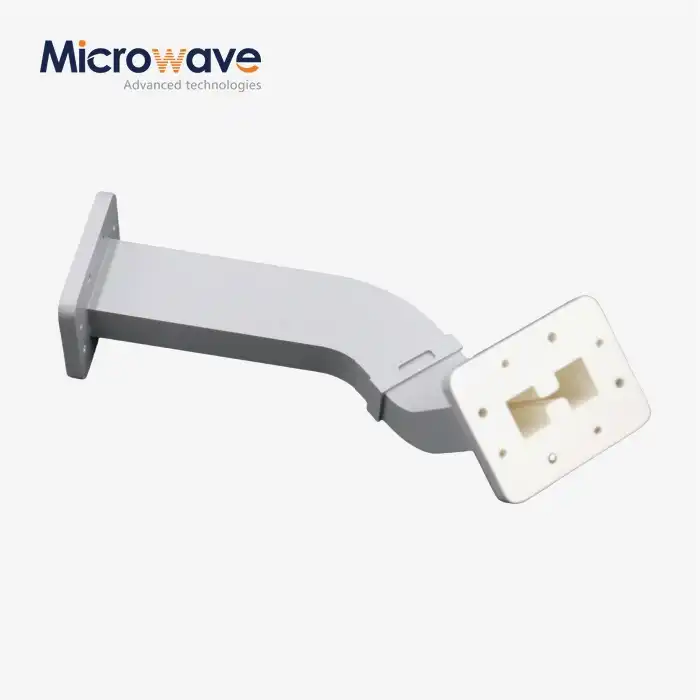 VIEW MOREDouble Ridge Waveguide Bend
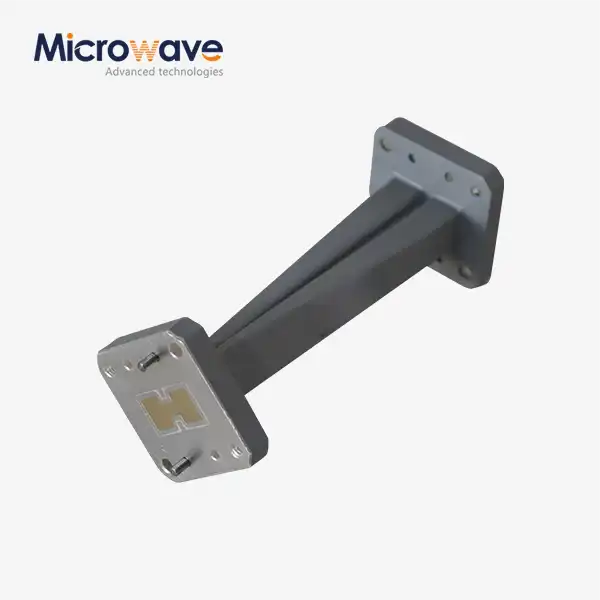 VIEW MOREDouble Ridge Twist Waveguide
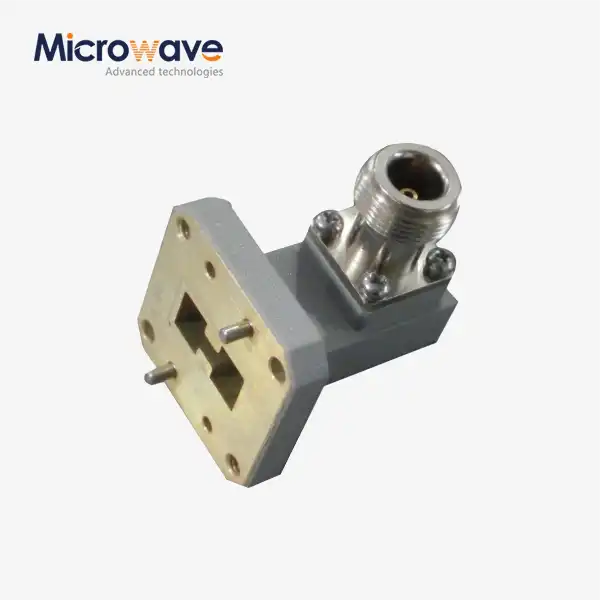 VIEW MOREDouble Ridged WG To Coaxial Adapter
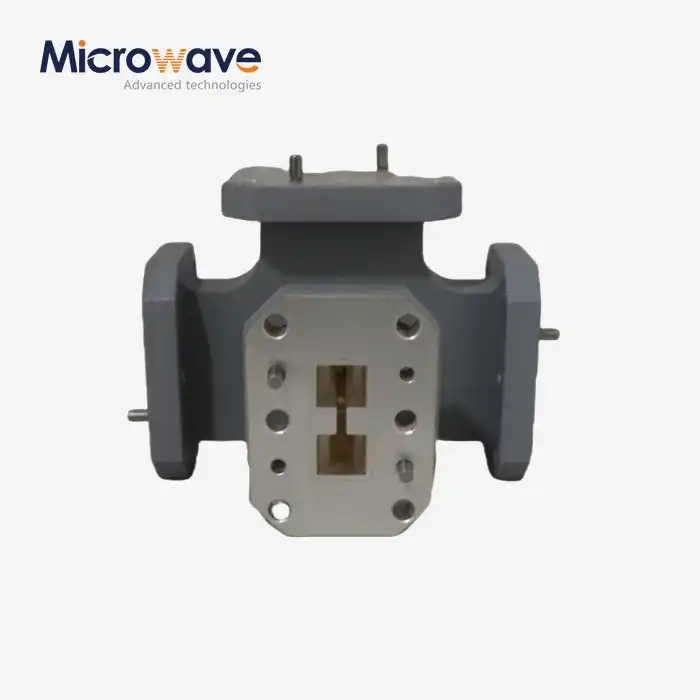 VIEW MOREDouble-Ridged Waveguide Magic Tee
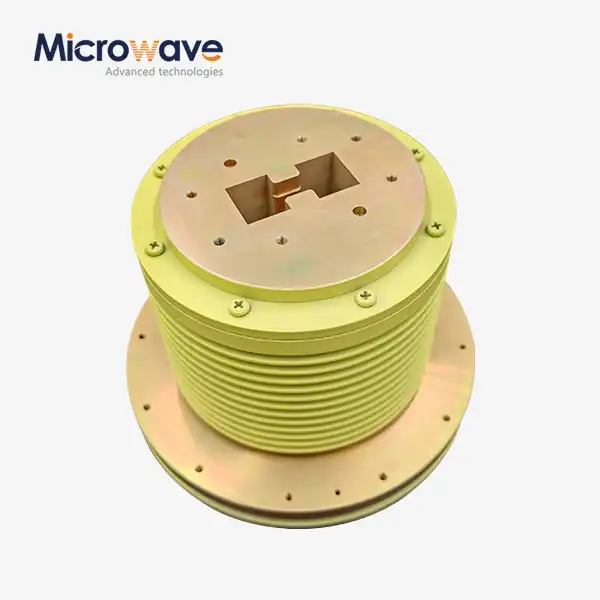 VIEW MOREDouble Ridge Waveguide Rotary Joint
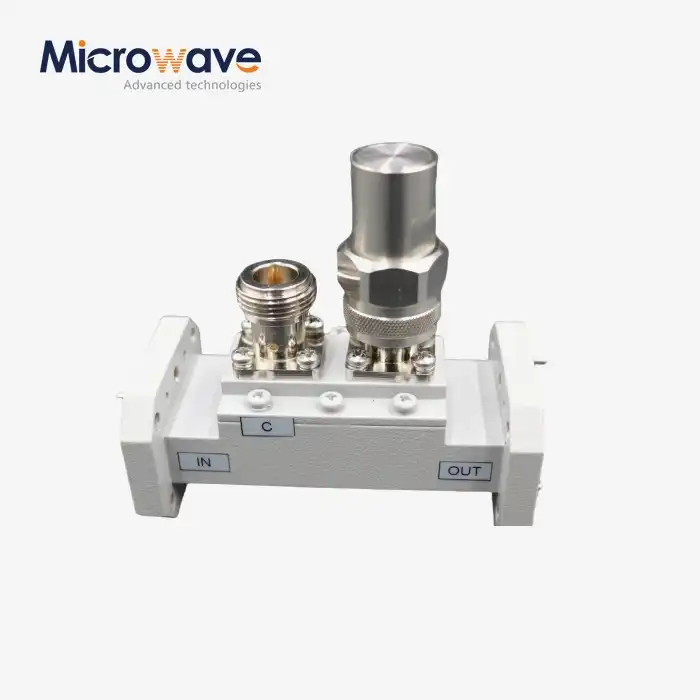 VIEW MOREDouble-Ridged Waveguide Loop Coupler
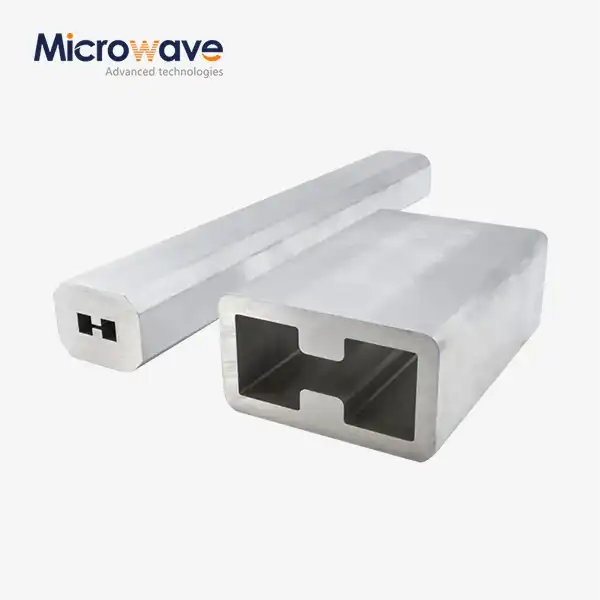 VIEW MOREDouble Ridge Waveguide Tube
 VIEW MOREPlastic Flange Caps