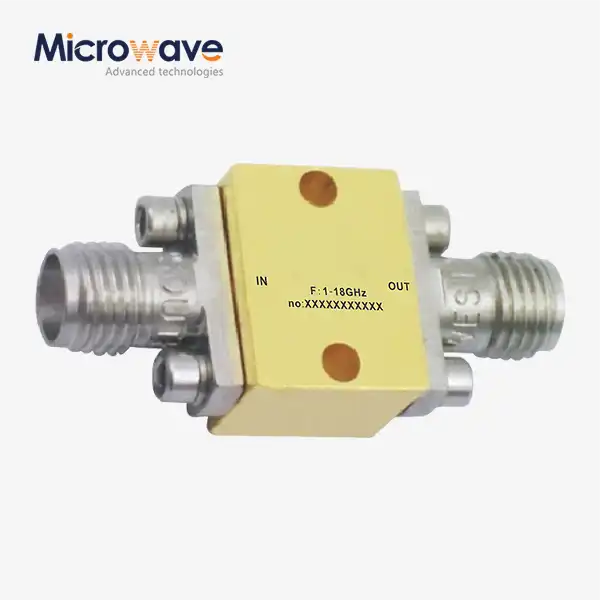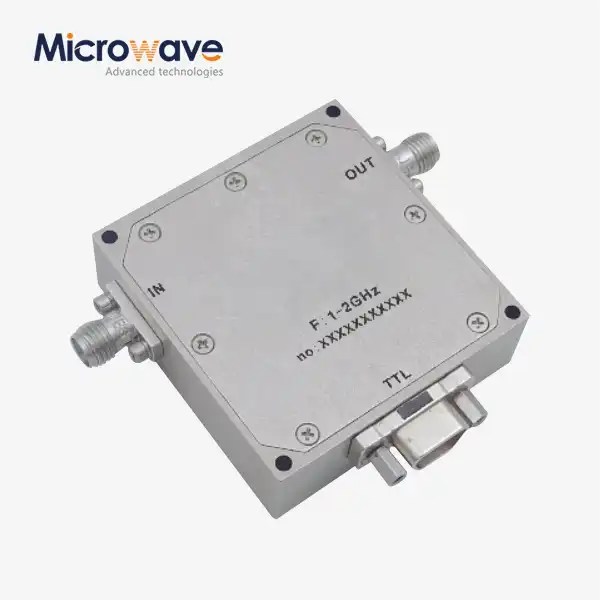






Ac Power Amplifier
AC Power Amplifier for Precision Testing & Grid Simulation | Advanced Microwave Technologies
Advanced Microwave Technologies Co., Ltd. (ADM) designs and supplies AC Power Amplifier systems for industrial testing, R&D, and grid simulation. With a THD of less than 0.1%, these units can play back sine, square, triangle, or complex transient waveforms. They can take either analogue or digital input. ADM has a lot of different output power levels, frequency bands, and load configurations, such as single-phase, three-phase, linear, and PWM switching. This means that engineers can customise the amplifier to meet their exact test needs instead of having to work around a set specification.
What Is an AC Power Amplifier?
The product is an electric device that changes the shape of an alternating-current signal while increasing its voltage or current. Not like a fixed-voltage AC source, it can work with an input voltage that changes and drive dynamic loads like reactive capacitive or inductive loads without oscillating or having an unstable output.
With this power, three tests can be done that regular electricity can't do:
- Grid disturbance simulation—Recreates voltage drops, frequency changes, and harmonic events to make sure that equipment meets standards like IEC 61000.
- Pure signal—Gives out sine waves with THD below 0.1%, which is needed for sensitive R&D measurements when mains power is too noisy.
- Not a normal frequency—Gives stable output at 400 Hz or 800 Hz for defence and aviation uses that can't get power from 50/60 Hz mains.
Key Technical Specifications
Parameter | Specification |
Output Waveform | Sine, Square, Triangle, Complex Transient |
THD (Total Harmonic Distortion) | < 0.1% |
Standard Frequency Coverage | 45 Hz – 500 Hz |
Extended Frequency Option | Up to 5 kHz / 10 kHz |
Output Configuration | Single-phase / 3-phase |
Amplifier Topology | Linear / PWM Switching |
PWM Switching Efficiency | ≥ 85% |
Cooling Method | Internal forced-air; external HVAC recommended for continuous max-load operation |
Operating Ambient Temperature | ≤ 40°C |
Protection Functions | OVP, OCP, OTP |
4-Quadrant (Regenerative) Option | Available |
DC Output (DC-Coupled Models) | Available |
Custom frequency ranges and power ratings are available. Contact ADM at craig@admicrowave.com for project-specific configurations.
Linear vs. PWM Switching Topology
Choosing a topology for an AC Power Amplifier affects both the quality of the test results and the cost of running the amp in the long term, so it is important to know what the difference is before choosing a unit.
There is less output noise with linear amplifiers, the waveforms are reproduced more accurately, and the transient response is faster. Because of these qualities, they are the best choice for testing for susceptibility, simulating sound, and making magnetic fields. On the other hand, they produce more heat and take up more space in the chassis than switching types.
PWM switching amplifiers work at 85% efficiency or higher, which means they put out less heat and can fit in a smaller space. This makes them useful for simulating high-power grids, manufacturing burn-in stations, and rack-dense installations where room is limited.
The engineering team at ADM can help you find the best topology (or mix of topologies) for your test program if it needs both low distortion and high power.
Single-Phase and 3-Phase Output Options
When used with a single phase, the amplifier lets you precisely control the voltage and frequency over a set range. Better models let you change the voltage level and phase angle for each phase independently, so you can test with three phases.
In order to model phase imbalance, phase loss, or unbalanced power, it is important to have separate phase control. Inverters that are connected to the grid, three-phase motors, and protection relays all need all of these tests. You don't have to wait for a real-life grid fault to happen before you can make ones happen in the lab.
4-Quadrant and Regenerative Capability
A lot of amplifiers only send power to the load in one direction. There needs to be a 4-Quadrant (regenerative) model to test something that lets energy move back from the load, like a PV inverter, a battery storage system, or a motor that slows down.
The four-quadrant units can both send and receive electricity. For testing Power Hardware-in-the-Loop (PHIL), they can be used as a full grid model and can simulate inductive or capacitive reactive loads. They can also handle back-EMF from moving loads without putting stress on the output stage. These units have output modes that are DC-coupled, which lets you check the DC offset tolerance of equipment that is hooked up to the power grid.
Sizing for High Inrush and Reactive Loads
A common mistake in sizing is figuring out the amplifier's rating by its RMS power alone. If a motor starts up with a high inrush current but then runs at a much lower steady-state draw, the amplifier needs to be able to handle that peak current. This usually means choosing a higher kVA rating or a unit that says it can handle a high crest factor.
The feedback loop of the amplifier has to stay stable while driving reactive loads across a wide range of power factors, from lagging to leading. Before sending any unit out, ADM tests it across the whole power factor range to make sure the feedback loop is stable and to rule out oscillations when there is a reactive load.
Quality Control and Inspection
Before sending an AC Power Amplifier to a customer, ADM checks it for the following things:
1. Full-load thermal cycling: During burn-in, units run at full power to find early thermal failures in semiconductors before the product leaves the factory.
2. Analysis of distortion: High-precision power analysers show that THD stays within the limits when different types of loads are present, such as reactive and nonlinear loads.
3. Reactive load stability test—Every unit is checked across the whole power factor range to make sure the feedback loop stays stable and doesn't oscillate.
4. Verification of protection logic—OVP, OCP, and OTP circuits are checked one by one to make sure they shut down correctly when there is a fault. This keeps both the amplifier and the Device Under Test safe.
Application Areas
- Defence and aviation—400 Hz and 800 Hz power delivery for testing equipment in the air
- EMC and compliance labs: tests for harmonic immunity and IEC 61000 grid disturbances
- Renewable energy—using regenerative 4-quadrant models to test PV inverters and battery storage
- Industrial output: high-power burn-in and testing on the production line
- Power Hardware-in-the-Loop (PHIL) modelling and precision signal amplification are done in research and development labs.
If your application doesn't fit into these groups, contact ADM to talk about whether a standard configuration or a configuration that has been changed will work for you.
FAQ
Q: What is the difference between a PWM switching product and a linear switching product in real life?
A: Linear amplifiers make less noise and react more quickly to sudden changes, which is important for checking for susceptibility and doing precise work in the lab. PWM switching amplifiers are better for high-power grid simulation and continuous burn-in use because they are more efficient (85% or higher) and take up less rack space.
Q: How does the amplifier work with phase imbalances in a three-phase system?
A: Yes. Modern 3-phase models let you set the voltage and phase angle separately for each phase. This is needed to test 3-phase motors and protection relays when there is phase loss or an imbalance in the voltage.
Q: How do I choose the right amplifier size when the load has a lot of inrush current?
A: Choose the right size based on the load's peak current need, not its average current need. When a load starts up, it has a lot of inrush current, so it needs an amplifier that can handle that peak. This is usually a higher kVA unit or one with a high crest factor rating.
Q: Can a thing give off DC power?
A: Models that are DC-coupled can boost DC signals and work as bipolar DC supplies. This helps check the DC offset limit in equipment that is connected to the power grid.
Q: Does the range of frequencies that are output change the price?
A: Yes. There are standard units for 45–500 Hz. Broadening the frequency range to 5 or 10 kHz needs more complex output filters and modulation circuitry, which raises the cost per unit.
Q: Does it need cooling from the outside?
A: Most high-power units have forced air cooling built in. External environmental control (HVAC) is needed to keep the temperature inside a rack box at or below 40°C so that it can run continuously at full load.
Contact Us
Have a project requiring a custom power rating or frequency range for an Ac Power Amplifier? Email ADM's engineering team at craig@admicrowave.com to discuss your requirements.