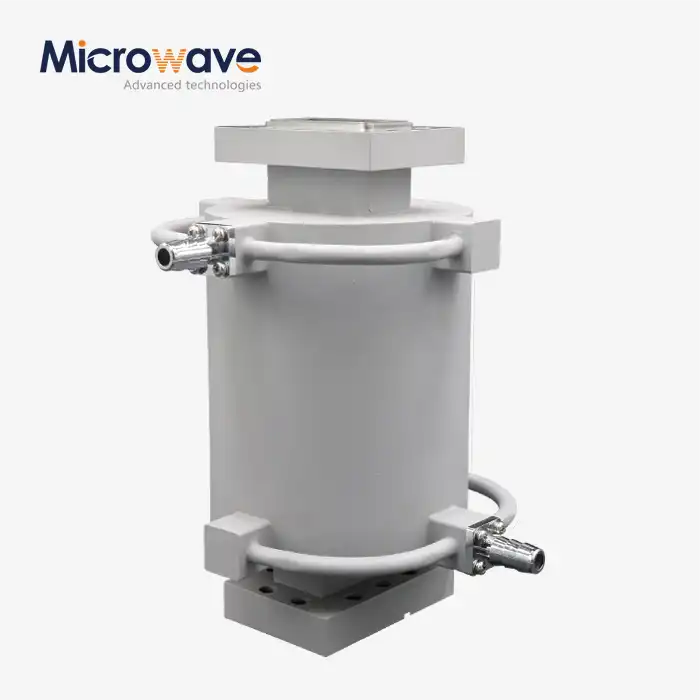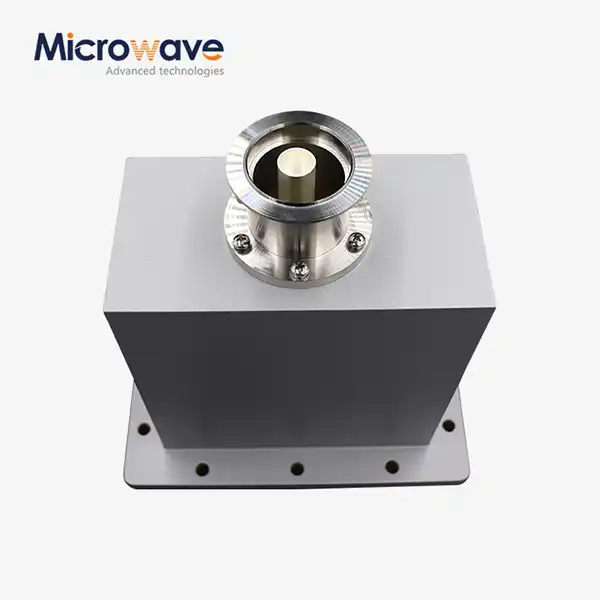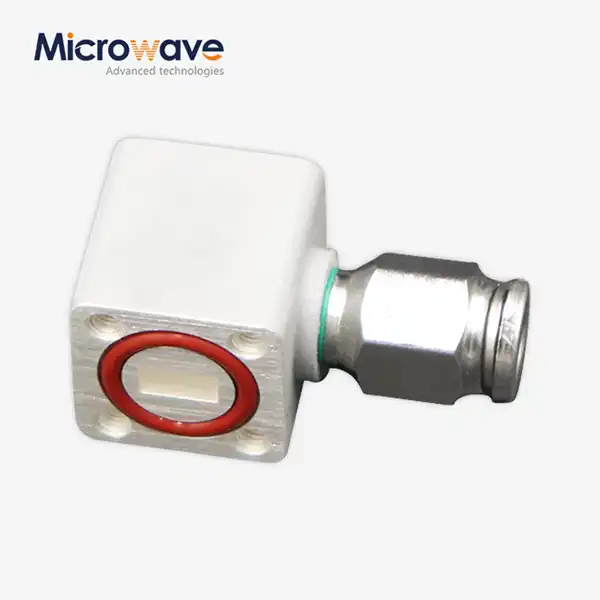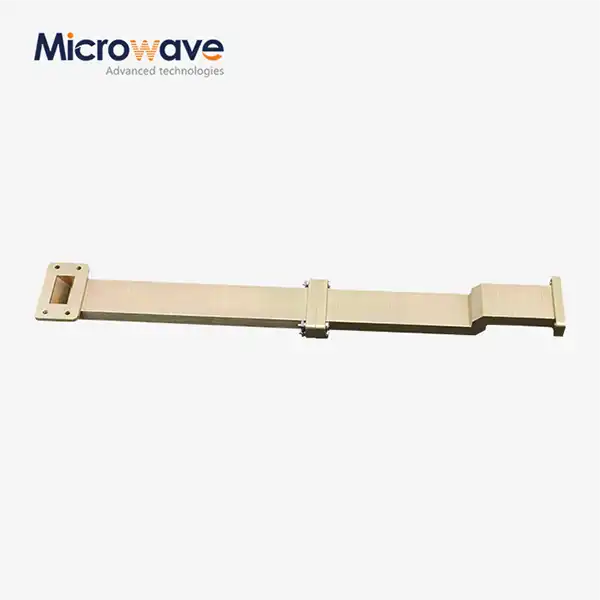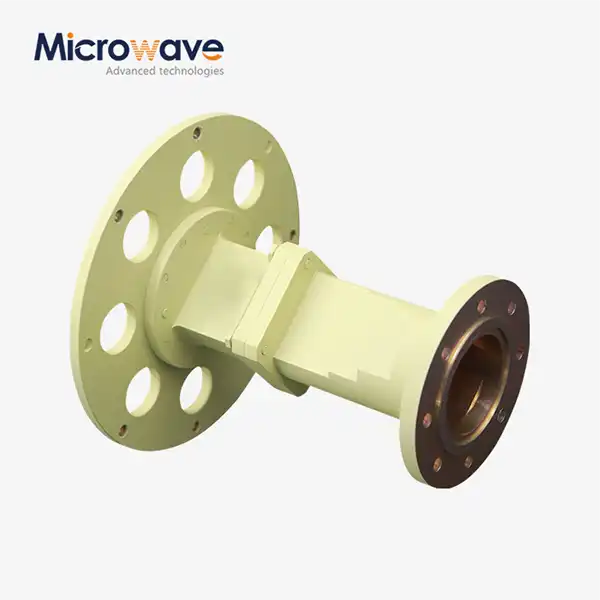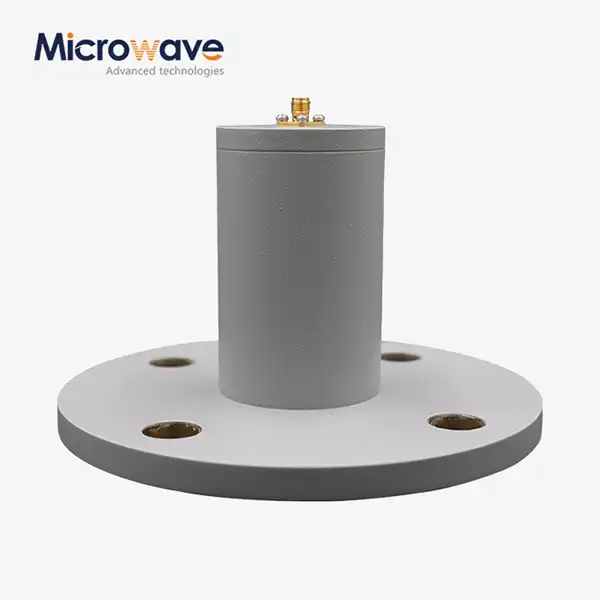






Low Ku Band Diplexer
Low Ku Band Diplexer for Satellite Communication Systems
Clear frequency separation between uplink and downlink routes is important for satellite ground equipment. ADM's Low Ku Band Diplexer connects the Rx downlink band (10.70–12.75 GHz) and the Tx uplink band (13.75–14.50 GHz) through a single antenna feed. It provides Tx-to-Rx isolation of more than 85 dB and insertion loss of less than 0.35 dB. It's made for satellite ground stations, VSAT terminals on ships, and connectivity platforms in the air that need to work reliably from -40°C to +85°C.
What Is a Low Ku Band Diplexer?
A product is a passive two-port radio frequency device that uses frequency division to combine and separate send and receive signals on a single antenna feed. One bandpass filter is for the Rx downlink path and the other is for the Tx uplink path. They join at the same point, so both signals can use the same physical port without getting messed up.
In real life, not having enough isolation means that a 100W broadcast signal adds about +50 dBm to the antenna feed. Usually, an LNB receiver can handle about -10 dBm of harm. There needs to be more than 85 dB of Tx-to-Rx isolation so that the transmit signal doesn't damage or overload the receive chain. A well-designed diplexer can do this in a single small housing, so you don't need different antennas for Tx and Rx.


Electrical and Physical Specifications
Parameter | Specification |
Rx Passband | 10.70 – 12.75 GHz |
Tx Passband | 13.75 – 14.50 GHz |
Insertion Loss | < 0.35 dB |
Tx-to-Rx Isolation | > 85 dB |
Return Loss | > 18 dB (VSWR ≈ 1.28:1) |
Power Handling (CW) | 50W – 500W |
Operating Temperature | -40°C to +85°C |
Passband Frequency Shift | < 2 MHz across full temperature range |
Interface Options | WR-75 waveguide, SMA, N-type coaxial |
Internal Plating | Silver |
Housing Material | Invar or temperature-compensated aluminum alloy |
Materials and Construction
The Low Ku Band Diplexer's cavity structure is made of either Invar or temperature-compensated aluminium alloys, which were both chosen because they don't expand or contract much when they get hot or cold. So, the resonant frequency stays below 2 MHz from -40°C to +85°C. This is important for keeping the insertion loss and return loss specs in field operations where temperatures are constantly changing.
At Ku-band frequencies, the skin effect makes the flow of current concentrate at the surface of internal conductors. All of the inside sides of the cavity are silver-plated because silver has a higher surface conductivity than copper or aluminium. This lowers resistive losses and keeps insertion loss below 0.35 dB. This has a real effect on the calculations for the system EIRP and the G/T link budget.
There are WR-75 waveguide interfaces and SMA or N-type coaxial connectors that can be used with existing system architectures.
Where This Diplexer Is Used
Maritime VSAT Terminals
Seas with constant mechanical vibration and salt fog are places where ships work. The diplexer keeps high-throughput data links going for ship telemetry and crew welfare while keeping the satellite downlink receiver from being overloaded by strong transmit signals.
Satellite News Gathering (SNG) Vehicles
Mobile transmitting units need small splitters that can handle high-wattage BUCs. The 50W–500W CW power handling range can handle the rough field conditions that are common for Ku-band news uplinks.
Airborne In-Flight Connectivity
In aerospace systems, diplexers are built into low-profile antennas on the fuselage, and they have to keep working even when the temperature and pressure change. In this situation, the need for isolation is determined by both the quality of the link and the need to follow the rules.
Testing and Quality Control
Each unit passes a multi-stage inspection before shipment.
- VNA S-Parameter Sweeps: Insertion loss (S21), isolation (S12), and return loss (S11) are measured across the full passband and rejection band using a Vector Network Analyzer.
- Passive Intermodulation (PIM) Testing: PIM levels are verified to below -140 dBc, which is particularly relevant for high-power digital modulation formats where junction non-linearities can degrade signal-to-noise ratio.
- Environmental Stress Screening: Units undergo thermal shock and vibration testing to validate mechanical integrity and tuning stability.
- Power Handling Validation: Sample units are tested at elevated power inputs to check for arcing or multipactor effects under relevant operating conditions.
ADM's test center has a 24-meter microwave darkroom that can measure frequencies from 0.5 GHz to 110 GHz.
Customization and Procurement
ADM lets you make your own Low Ku Band Diplexer designs for non-standard frequency plans, different connector configurations, or unique mechanical form factors. If your application needs Extended Ku receive coverage above 12.75 GHz, you should get a custom-tuned design instead of a standard Low Ku unit, since standard Low Ku units aren't optimised for that range and will show worse insertion loss and VSWR without retuning.
ADM has engineering and production facilities in Xi'an, Chengdu, Beijing, Tianjin, and Shijiazhuang. They can help with both making prototypes and buying in bulk.
FAQ
Q: What level of isolation does a 100W VSAT system need?
A: The transmit signal needs to be isolated from the receiver at least 85–90 dB when the transmit power is 100W. This is to keep it below the LNB damage threshold, which is usually around -10 dBm.
Q: Can Extended Ku bands up to 18 GHz be used with this unit?
A: Not unless you tune it yourself. The normal Rx passband is between 10.70 and 12.75 GHz. If you work outside of that range without retuning, you will have high insertion loss and low return loss. Get in touch with us to talk about custom-tuned setups.
Q: How does changes in temperature affect the passband frequency?
A: When the hollow walls heat up, they change the resonant frequency. This effect is lessened by Invar and temperature-compensated aluminium alloys, which keep the passband shift below 2 MHz across the entire working range of -40°C to +85°C.
Q: What's the difference between a duplexer and a diplexer when it comes to satellites?
A: A diplexer splits signals into groups based on frequency band. This is how Ku-band SATCOM lines that use frequency division duplexing (FDD) usually work. Most of the time, "duplexer" refers to time-domain switching, which is used in TDD systems. A diplexer is the right part for Ku-band satellite ground equipment.
Q: Why is silver used instead of copper or aluminium for plating inside?
A: Skin effect lets only a small amount of current flow to the surface of a conductor above 12 GHz. Copper or aluminium don't conduct electricity as well on their surfaces as silver does. This lowers resistance losses and keeps insertion losses low.
Q: How much power can it handle continuously?
A: The CW power handling ranges from 50W to 500W, based on the connector type, configuration, and design of the thermal management.
Contact Us
For technical questions or procurement inquiries about our Low Ku Band Diplexer, contact ADM's engineering team at craig@admicrowave.com.