






Coaxial Verification Kits
Coaxial Verification Kits for VNA Measurement Validation
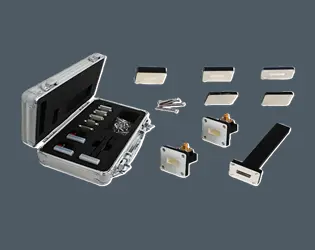
Coaxial Verification Kits from Advanced Microwave Technologies are integrated reference standard sets designed to confirm Vector Network Analyzer (VNA) measurement accuracy after system calibration. Each kit includes beaded and beadless air lines, stepped impedance airlines (Beatty standards), and fixed attenuators — all fully characterized with S2P data files and uncertainty limits. These kits cover connector interfaces from Type-N up to 1.0 mm, supporting frequencies from DC to 110 GHz, and are suited for accredited labs, aerospace test stations, and mmWave R&D environments.
What Are Coaxial Verification Kits and Why Do They Matter?
After a VNA is calibrated, how do you confirm the calibration actually worked? That is the specific problem these kits address.
Each kit provides a set of devices with precisely characterized electrical properties. You measure them on your calibrated VNA and compare the results against the stored reference data. If the results fall within the stated uncertainty budget, your system is confirmed to be operating correctly.
This process supports the requirements of quality management systems including ISO/IEC 17025 and ANSI/NCSL Z540, making verification kits a practical tool in accredited test environments.
Connector Interface Options and Frequency Coverage
Connector Type | Frequency Coverage |
Type-N | DC to 18 GHz |
3.5 mm | DC to 34 GHz |
2.92 mm | DC to 46 GHz |
2.4 mm | DC to 50 GHz |
1.85 mm | DC to 67 GHz |
1.0 mm | DC to 110 GHz |
All connector interfaces comply with IEEE 287 grade specifications. Air lines feature unsupported center conductors to minimize dielectric loss. Contacts are gold-plated beryllium copper for consistent conductivity and long-term durability.
Electrical Performance
Parameter | Specification |
Impedance Tolerance | 50 ± 0.5 Ohm |
Return Loss | > 30 dB |
These specifications allow the kits to serve as reference standards for both laboratory and production-line verification workflows.
What's Inside a Verification Kit?
A standard Coaxial Verification Kits contains three types of reference standards, each targeting a different aspect of VNA performance.
Beaded and beadless air lines give a stable guide for gearbox. For a good comparison of phase and insertion loss, beadless air lines keep dielectric loss to a minimum.
Stepped Impedance Airlines (Beatty Standards) create a purposeful impedance mismatch at certain line lengths. This makes it hard for the VNA to measure both size and phase ripple. This puts a direct strain on dynamic accuracy and residual directivity.
To check the VNA's dynamic range and magnitude accuracy across the whole frequency range, fixed attenuators are used.
Each kit comes with a data recording device that has S2P files and uncertainty limits for every part. This lets you compare measured results directly with reference data that was defined by the factory.
Application Scenarios
Aerospace and Defense
Engineers who are checking radar modules and Electronic Warfare systems use verification kits to find measurement drift caused by unstable cables or worn connectors before it affects test results for important parts.
5G and mmWave R&D
It is important to have a verified measurement baseline when describing mmWave chipsets and antennas at frequencies of up to 67 GHz or 110 GHz. Most of the frequencies that are used in this work are covered by the 1.85 mm and 1.0 mm connectors.
Accredited Metrology Labs
Third-party calibration labs use verification kits to record "As-Found" performance data on customer VNAs before they are calibrated or adjusted. This is required by ISO/IEC 17025 calibration certificates.
RF Manufacturing and Production
Coaxial Verification Kits are used to make sure that test stations don't lose their accuracy over time in production settings where a lot of coaxial connectors and RF components are being tested.
Quality Control Process
Pin Depth and Mechanical Gauging — Center conductor recession or protrusion is measured to tight tolerances. A protruding pin can permanently damage a VNA port; excessive recession reduces measurement repeatability. This is the most critical inspection checkpoint.
Visual Inspection Under Microscopy — Mating surfaces, collets, and reference planes are inspected for concentricity, surface scratches, and plating integrity, as surface condition directly affects S-parameter readings.
Measurement Against Reference Standards — Each physical component is measured against a reference metrology system. The measured deviation must fall within the calculated uncertainty budget before the kit is approved for shipment.
FAQ
Q: What's the difference between a Verification Kit and a Calibration Kit?
A: To get rid of systematic errors in the VNA, a Calibration Kit figures out error coefficients. After calibration, a Verification Kit with known characterisation data is used to make sure the calibration went well and the VNA is measuring within its uncertainty limits.
Q: How often should these kits be checked again?
A: It's normal to wait 12 months between visits. For daily use in places with a lot of production, a shorter recalibration cycle might be enough to keep an eye on wear on the connectors and the depth of the center wire pins over time.
Q: Can I use a Verification Kit instead of a Calibration Kit?
A: No, verification parts like Beatty standards or attenuators don't set the open, short, or load standards that are needed to solve the 12-term error model. They are only used for proof after calibration.
Q: What should I do if the verification reports show a big difference?
A: Clean and check all of the connectors, make sure the torque settings are correct, and look at the pin depth of the test wires. Fix the VNA's settings and do the verification process again. We may need to service or re-calibrate the VNA or the kit itself if the results stay outside the uncertainty budget.
Q: What kind of information comes with each kit?
A: Each kit comes with a data storage device that stores S2P files and uncertainty limits for each part. This lets you directly compare the results you measure to the reference values set by the factory.
Contact Us
To ask about Coaxial Verification Kits or to specify a connector type for your frequency range, contact us at craig@admicrowave.com.
YOU MAY LIKE
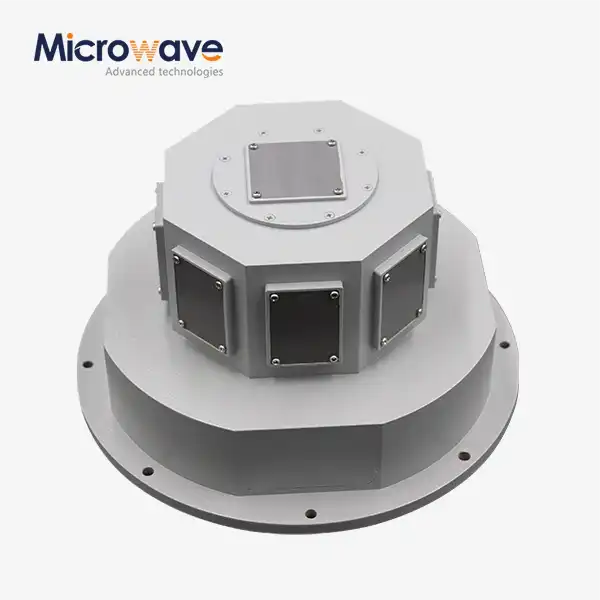 VIEW MORESlotted Waveguide Array Antenna
 VIEW MOREOpen Boundary Dual Linear Polarization Four Ridged Horn Antenna
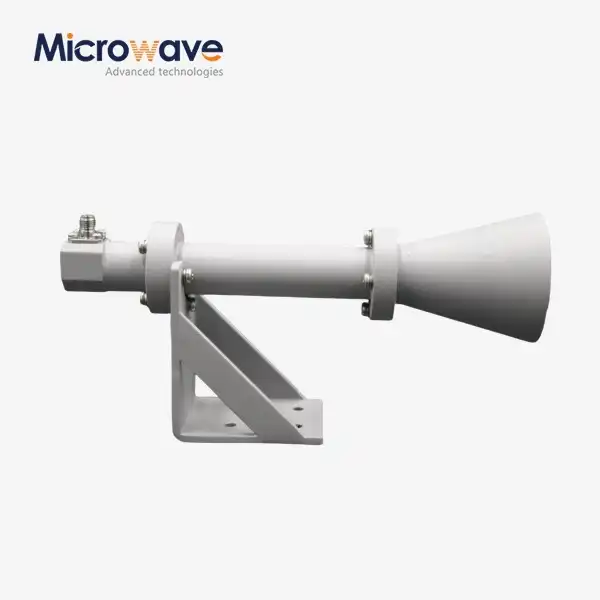 VIEW MOREDual Linear Broadband Circular Polarization Horn Antenna
 VIEW MOREPyramidal Linear Polarization Horn Antenna
 VIEW MOREConical Linear Polarization Horn Antenna
 VIEW MORELow Side Lobe Diagonal Linear Polarization Horn Antenna
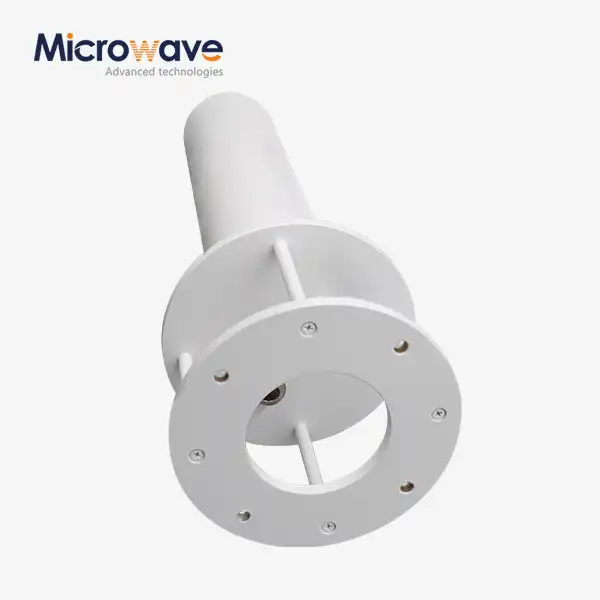 VIEW MOREQuadrifilar Helix Antenna
 VIEW MORECassegrain Antenna