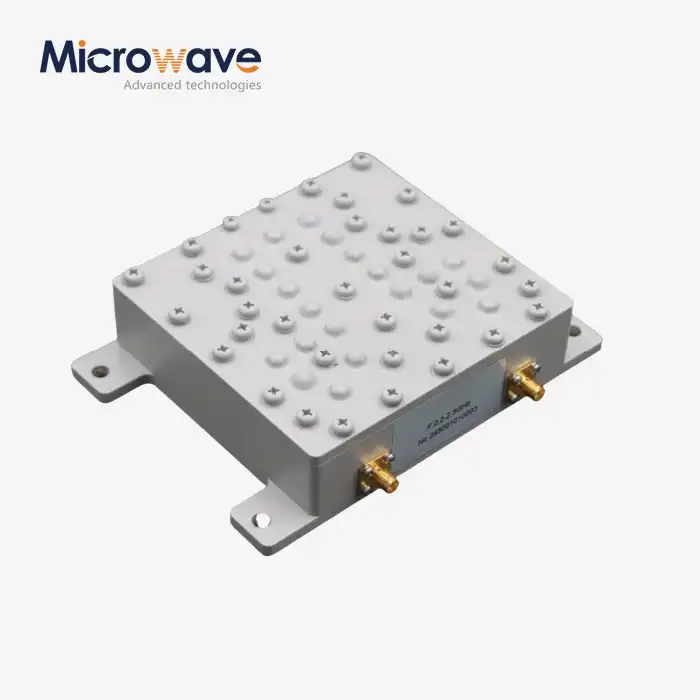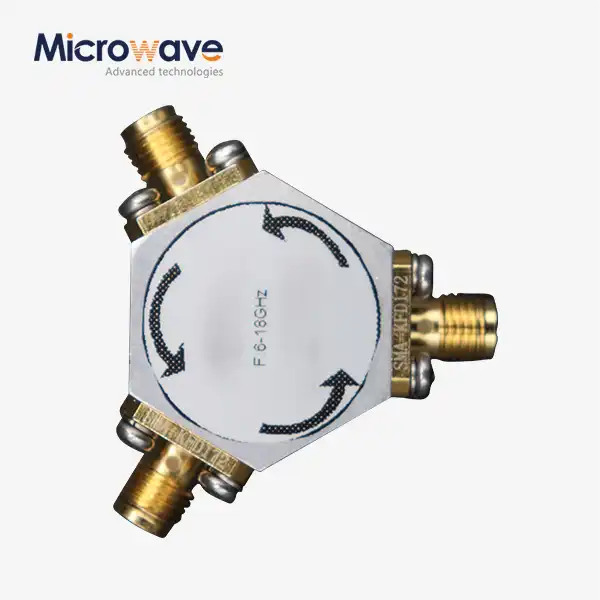





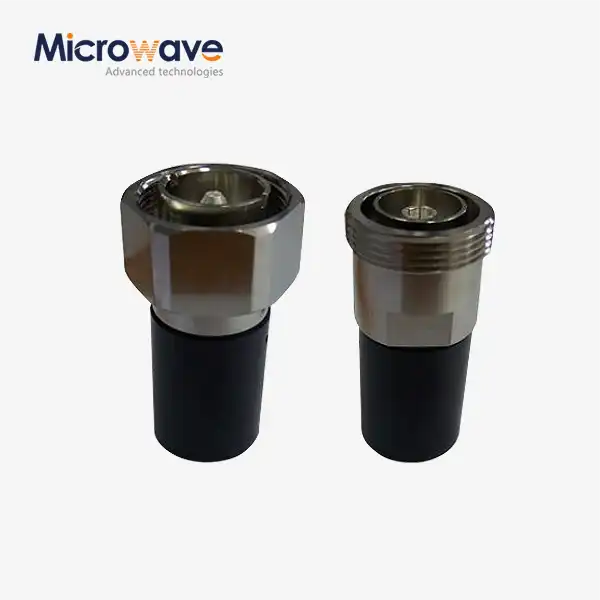
Coaxial Termination
Coaxial Termination for RF & Microwave Systems — High Absorption, Stable Impedance, Wide Frequency Coverage
Advanced Microwave Technologies Co., Ltd. (ADM) designs and manufactures coaxial termination components for RF and microwave systems operating from DC to 110 GHz. Each unit provides stable 50-ohm or 75-ohm impedance matching with VSWR as low as 1.05:1. Power handling ranges from 0.5 W precision lab loads to configurations exceeding 50 kW. ADM serves telecommunications, aerospace, radar, and test & measurement customers through a dedicated R&D laboratory and a 24-meter Microwave Darkroom test facility.
What Is a Coaxial Termination?
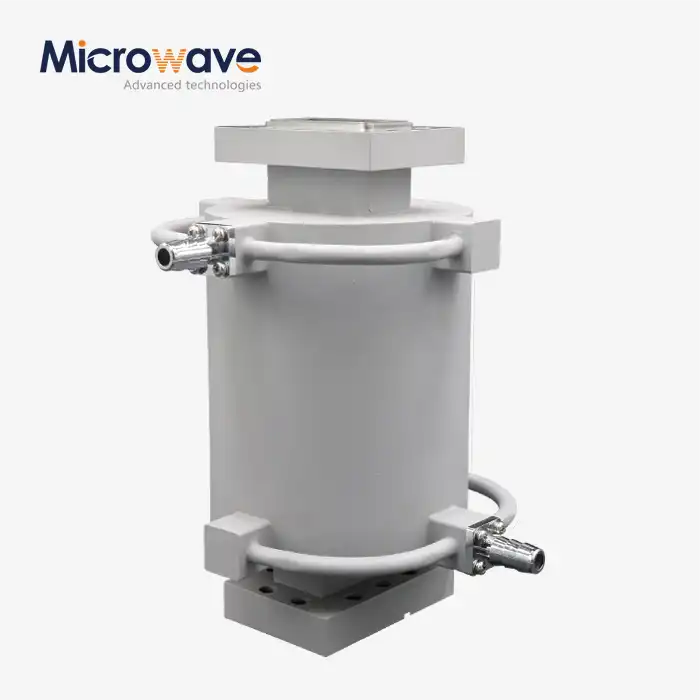
A product — also known as an RF load or dummy load — is a one-port passive component placed at the end of a transmission line or unused port. Its function is to absorb incident RF energy and convert it into heat rather than reflect it back into the system.
Without a properly matched termination, reflected energy creates standing waves (high VSWR), which cause signal distortion, power loss, and potential damage to power amplifiers and sensitive front-end components. A well-specified termination eliminates these problems at the port level.
ADM's terminations address three specific problems that RF engineers encounter in system design and integration:
· Standing wave suppression — prevents VSWR-driven signal distortion and power loss
· Transmitter protection — absorbs reflected energy before it reaches power amplifiers
· Port isolation — terminates unused ports on splitters, hybrids, and multi-port switches to maintain system balance

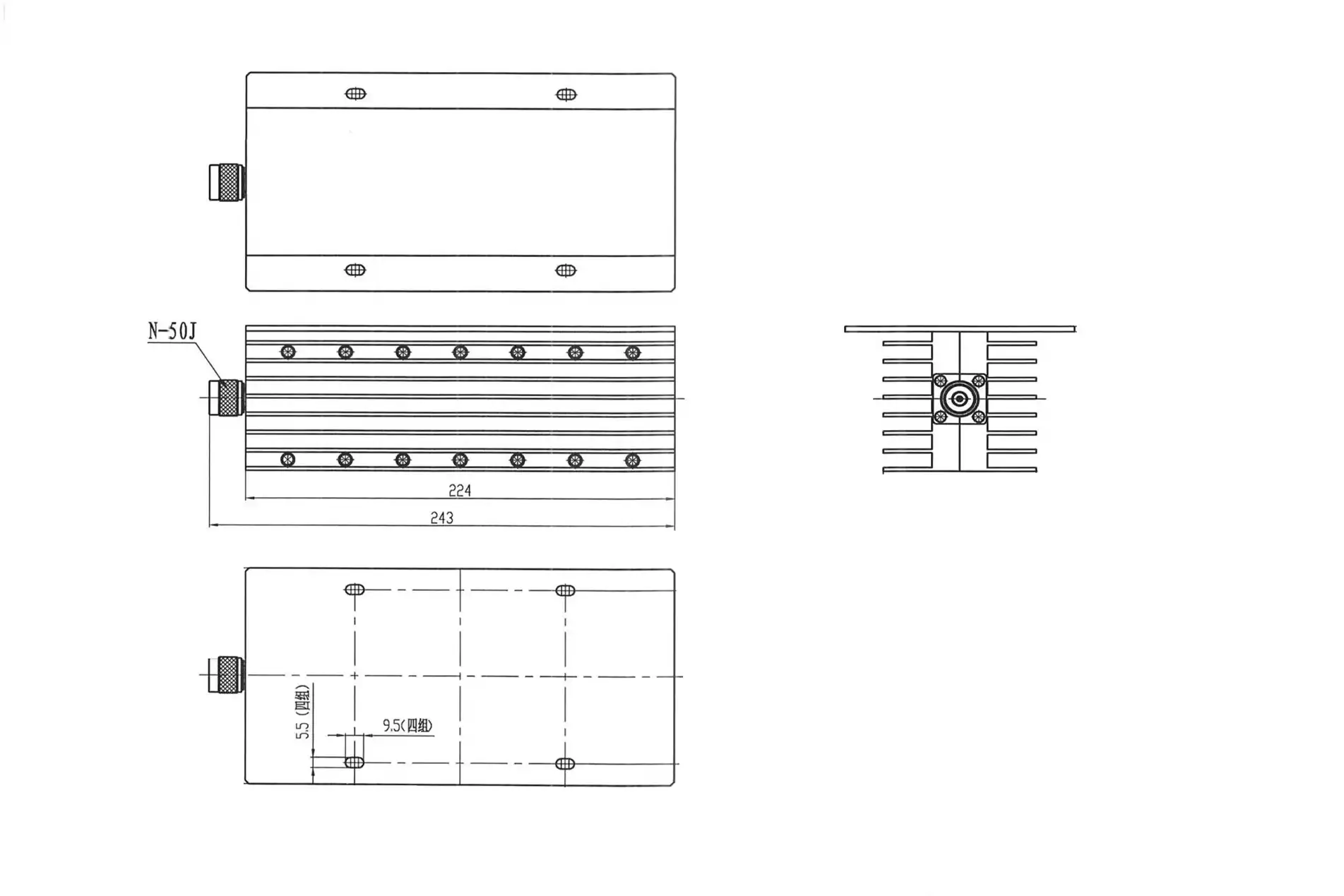
Key Technical Specifications
Parameter | Specification |
Impedance | 50 Ω / 75 Ω |
Frequency Range | DC – 110 GHz |
VSWR | 1.05:1 – 1.25:1 (frequency dependent) |
Power Handling | 0.5 W (precision lab) – 50 kW+ (high-power) |
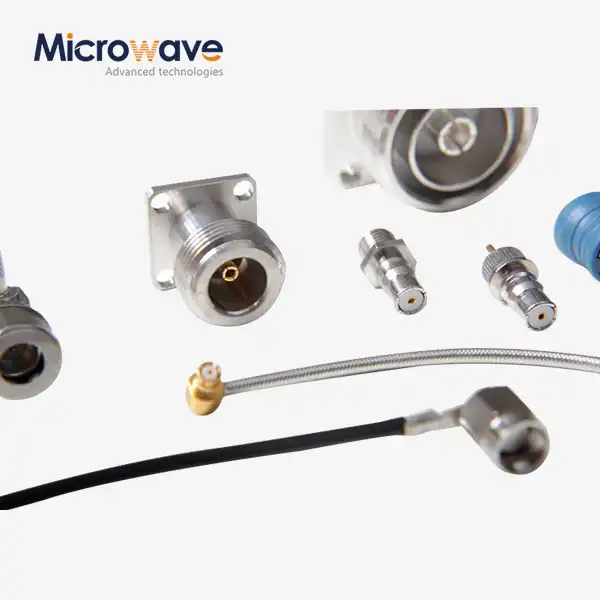
Connector Types | SMA, N-Type, 2.92 mm, DIN 7/16 |
Resistive Substrate | BeO, AlN, Alumina |
Housing Material | Passivated Stainless Steel / Ternary Alloy Plated Brass |
Corrosion Resistance | Salt-spray tested |
Compliance | MIL-DTL-39030, IEC 61169 |
Material Construction and Design
How a coaxial termination handles power and heat is based on the resistive substrate. Depending on the needs of the application, ADM gives three substrate options:
When high power is needed, Aluminium Nitride (AlN) is the best choice. It has the same thermal conductivity as Beryllium Oxide and is safe to use and doesn't contain any harmful chemicals. This is important to keep in mind in production settings where safety rules apply.
Beryllium Oxide (BeO) is very good at handling heat, but it needs to be handled in a certain way because it can be toxic during machining or if the part is broken physically.
Alumina works well in low- to medium-power situations where saving money and having stable RF properties are the most important things.
The Passivated Stainless Steel and Ternary Alloy Plated Brass used for the housings are chosen to be resistant to salt spray corrosion. This means that these terminations can be used for outdoor telecom infrastructure and harsh-environment aerospace installations.
Application Areas
5G and LTE infrastructure for communications
Terminators are put on the ports of hybrid combiners and directional couplers that aren't being used in massive MIMO base stations and antenna distribution systems. This keeps the port isolation requirements and stops inter-sector interference when it's hot outside.
Radar Systems for Space and Defence
With high-power terminations, engineers can test radar transmitters at full power without sending out data. This is important for calibrating systems, testing them in secret, and developing radar for use in the air or at sea.
Test and measure with precision
Precision terminations are used as the "Match" standard to calibrate Vector Network Analysers (VNAs) in labs and R&D settings. They set the 50-ohm standard baseline that other parts of the measurement chain are checked against.
Quality Control Process
Before being sent out, every unit made at ADM goes through a structured QC process.
VSWR / Return Loss Sweep
A VNA is used to sweep each unit across its full rated frequency band. This makes sure there are no reflection spikes and that the requirements of MIL-DTL-39030 are met.
Handling Power and Burn-In Tests
Continuous Wave (CW) power conditions are used to test the units' thermal stability and make sure that the resistive film bonds stay solid when they are loaded. This step checks for resistance drift, which could happen in real life and cause the unit to deviate from its rated impedance.
Testing for Passive Intermodulation (PIM)
Low-PIM terminations are tested to make sure they don't send out signals that interfere with cellular networks in areas with a lot of radio frequency (RF) activity.
Checking the Connector Interface
The depth of the coaxial termination pin and the quality of the thread are checked mechanically against IEC interface standards. This keeps test tools and connectors that fit together from getting damaged by interfaces that don't meet standards.
Customization and Supply Options
The engineering team at ADM can support custom configurations that are based on the needs of the system. Connector interface (SMA, N-Type, 2.92 mm, DIN 7/16) is one of the options. Other options include power rating, substrate material, and housing finish. ADM can help with both normal procurement and development needs that are unique to a project.
If your application needs something that isn't in the standard product line, talk to ADM's engineering team about your choices.
FAQ
Q: What's the difference between an amplifier and a product?
A: A termination is a device with only one port that absorbs the signal and stops it fully. A device with two ports called an attenuator lowers the signal's intensity while still letting it pass through. They are not interchangeable because they do different things.
Q: How do I pick the right power level?
A: It is common to choose a termination rated higher than the average power your system is expected to use. This is done to account for power spikes and thermal derating during continuous operation. If you're not sure what rating is best for your program, talk to ADM's engineering team.
Q: Can I connect a 50-ohm termination to a 75-ohm loop?
A: Not really. If the terminal and the transmission line don't have the same impedance, the signal will be reflected and power will be lost. Always make sure that the termination impedance is the same as the characteristic impedance of your system.
Q: Why is AlN better than BeO for high-power units?
A: AlN has about the same heat conductivity as BeO, but it is safe and doesn't contain any harmful chemicals. Because BeO is toxic when machined or damaged, it needs to be handled with great care. This makes AlN a better choice for production and maintenance settings.
Q: What happens if a termination is loaded with more power than it can handle?
A: The resistive part gets too hot, which makes the resistance change from what it was supposed to be. In the worst situations, this can cause an open circuit, melted dielectric, or damage to the connector that connects to it.
Q: What kinds of connector ports does ADM work with?
A: The ADM supports SMA, N-Type, 2.92 mm, and DIN 7/16 connector interfaces, which means it can work with most common RF and microwave system setups.
Contact Us
For technical inquiries or custom coaxial termination requirements, contact ADM's engineering team at craig@admicrowave.com.
_1733809032116.webp)